
Wireless vs Desktop Mics: Which Is Better for Podcasts?
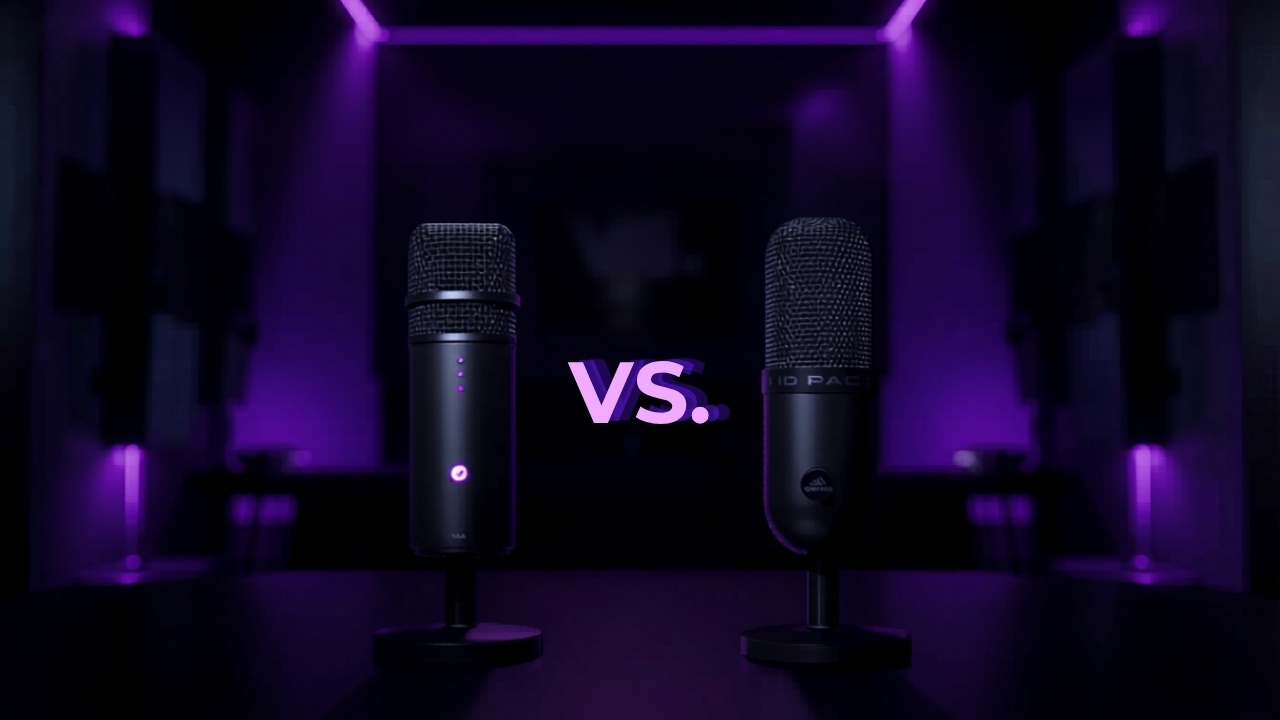
Every podcaster eventually faces the microphone decision. Not the first one, which is usually made quickly out of necessity or budget constraint, but the considered one. The one that comes after a few months of recording, when you have a clearer sense of what your show actually needs and a growing awareness of where your current setup is limiting you.
For many podcasters, that reconsidered decision lands squarely on the question of wireless versus desktop. It sounds like a simple comparison. One has cables, one does not. But spend any time researching the topic and you quickly discover that the differences go considerably deeper than the presence or absence of a wire, touching on audio quality, workflow practicality, recording environment, and the specific demands of different podcast formats and production setups.
The honest answer to which is better for podcasting is the same answer that applies to most meaningful equipment decisions: it depends. But it depends on specific, identifiable factors that this guide will walk you through so that by the end, you have a clear framework for making the right choice for your particular show, your particular workflow, and your particular ambitions.
Understanding What Each Microphone Type Actually Is
Before comparing the two categories, it is worth being precise about what each one encompasses, because both terms cover a wider range of products and configurations than they might initially suggest.
Desktop Microphones: The Podcast Recording Standard
Desktop microphones, also referred to as studio microphones, tabletop microphones, or simply podcast mics, are stationary recording devices designed to be positioned at a fixed point relative to the speaker and remain there throughout the recording session. They connect to the recording system via USB or XLR cable and are typically mounted on a desk stand, boom arm, or floor-standing microphone stand.
This category includes an enormous range of products spanning from entry-level USB microphones designed for beginners to broadcast-quality XLR dynamic and condenser microphones used by professional radio hosts, podcast studios, and recording artists. What they share is a design philosophy oriented around capturing the best possible audio from a stationary speaker in a controlled recording environment.
Within the desktop microphone category, the two most important subcategories for podcasters are dynamic microphones and condenser microphones, which have meaningfully different characteristics that affect how they perform in different recording environments.
Dynamic microphones are robust, relatively insensitive to ambient noise and room acoustics, and produce a warm, focused sound that is well-suited to voice recording in imperfect acoustic environments. The Shure SM7B and the Rode PodMic are among the most widely used dynamic microphones in podcasting.
Condenser microphones are more sensitive than dynamics, capturing a wider frequency range and more detail in the recorded sound. They sound more open and airy than dynamics but are also more sensitive to background noise and room acoustics, which means they perform best in well-treated recording environments. The Audio-Technica AT2020 and the Rode NT1 are popular condenser options among podcasters.
Wireless Microphones: Range, Freedom, and Complexity
Wireless microphones transmit audio via radio frequency rather than through a physical cable connection. They typically consist of a transmitter, which is attached to or held by the speaker, and a receiver, which connects to the recording system and captures the transmitted signal.
In the podcasting and content creation context, the wireless microphone systems most relevant to this comparison fall into three main categories.
Lavalier wireless systems consist of a small clip-on microphone attached to the speaker's clothing near their chest or lapel, connected to a belt-pack transmitter. The receiver plugs into the recording device or audio interface. This configuration is common in broadcast television, documentary filmmaking, and live event production. In the content creation space, systems from Rode, DJI, and Hollyland have made lavalier wireless accessible at price points well below what professional broadcast systems cost.
Handheld wireless systems consist of a microphone body that incorporates the transmitter, used like a traditional handheld microphone. These are common in live performance and broadcast interview contexts and less commonly used in studio podcast recording, though they appear in certain mobile or field recording scenarios.
Clip-on wireless systems designed specifically for content creators, such as the Rode Wireless GO II and DJI Mic series, represent a newer category that bridges lavalier functionality with more flexible placement options. These systems are compact, relatively simple to operate, and increasingly capable in terms of audio quality.
Audio Quality: The Most Important Comparison
For a medium that is fundamentally about audio, quality of sound reproduction has to be the primary axis of comparison between any two microphone options. And on this axis, the comparison between wireless and desktop microphones reveals meaningful differences that every podcaster should understand before making a decision.
Where Desktop Microphones Hold a Genuine Advantage
High-quality desktop microphones, particularly broadcast-grade dynamic and condenser microphones in the mid to upper price ranges, remain the gold standard for podcast audio quality. The reasons are rooted in physics and engineering rather than brand preference.
Desktop microphones are designed with large capsules that capture the full frequency range of the human voice with accuracy and depth. They are positioned close to the speaker's mouth, typically two to four inches away, which produces the warm, intimate, present vocal quality that listeners associate with professional podcast audio. They connect via cable, which means the audio signal travels from capsule to interface without any wireless transmission step that could introduce artifacts, compression, or latency.
The signal chain from a quality XLR dynamic microphone to a clean audio interface to your recording software is as transparent and loss-free as podcast audio capture gets. Nothing is being converted to a radio frequency signal and back. Nothing is being compressed for wireless transmission. The sound that hits the capsule is, with minimal coloration or artifact, the sound that appears in your recording.
This directness of signal is why professional broadcast environments, podcast studios, and high-end recording setups overwhelmingly use wired desktop or boom-mounted microphones rather than wireless alternatives, even when the logistics of cable management create practical challenges.
Where Wireless Microphones Have Improved Dramatically
It would be inaccurate to present this comparison as if wireless microphone technology has remained static while desktop technology advanced. The wireless microphone systems available to content creators in 2026 are substantially better than those available even three years ago, and the gap between wireless and wired audio quality has narrowed meaningfully at certain price points.
Systems like the Rode Wireless PRO, the DJI Mic 2, and the Hollyland Lark M2 produce audio quality that is genuinely impressive relative to their price and their convenience. For podcasters recording in field environments, in-person event coverage, walking and talking formats, or any context where freedom of movement is a genuine production requirement, these systems deliver results that were simply not achievable with wireless technology at accessible price points until relatively recently.
The key caveat is that even the best wireless systems in the content creator price range do not match the audio quality of a broadcast-grade wired desktop microphone used in a properly treated acoustic environment. The wireless transmission process, even using modern digital transmission protocols, introduces a level of audio processing and compression that is audible to trained ears and measurable in the frequency response of the recorded signal.
For most casual listeners, this difference may not be perceptible in a general listening context. For audiophiles, audio professionals, and listeners using quality monitoring equipment, the difference is real and consistent.
The Room Acoustic Factor
One area where wireless lavalier microphones have a genuine and often overlooked advantage over desktop condenser microphones specifically is their relative immunity to poor room acoustics.
A lavalier microphone positioned close to the speaker's mouth captures a direct, intimate signal that is largely independent of the acoustic properties of the room. The microphone is so close to the sound source that room reflections and ambient noise have relatively little impact on the recorded signal compared to what a desktop microphone positioned further from the speaker would capture.
This means that in an untreated home recording environment with significant room echo and ambient noise, a quality lavalier wireless system will often produce cleaner, less reverberant audio than a desktop condenser microphone, even if the desktop mic is technically superior in its frequency response and capsule quality.
Dynamic desktop microphones narrow this gap considerably because their directional pickup pattern and lower sensitivity to room acoustics make them more forgiving of imperfect environments than condensers. But the lavalier's proximity advantage in challenging acoustic environments is a real consideration for podcasters who do not have access to a treated recording space.
Workflow and Practical Considerations
Audio quality is the primary consideration, but it is not the only one. The practical realities of using each microphone type in a real podcast workflow affect the consistency, sustainability, and overall quality of your production in ways that matter alongside the raw audio performance.
The Case for Desktop Microphones in a Studio Workflow
For podcasters recording in a consistent, dedicated space, whether a professional podcast studio or a well-set-up home recording environment, desktop microphones offer a workflow that is hard to beat for reliability and consistency.
The microphone is positioned once, set up correctly, and remains in place. Every session begins with the same microphone in the same position relative to the speaker, which produces consistent audio quality across episodes without requiring any significant setup time. The cable connection to the interface or recording system is permanent and reliable. There are no batteries to charge, no transmitter-receiver pairing to verify, no wireless frequency conflicts to troubleshoot.
This simplicity and reliability is enormously valuable for maintaining a consistent publishing rhythm. When the technical setup is dependable, more of your pre-session mental energy goes toward your content and delivery rather than equipment management. And consistent, reliable audio quality across episodes builds the kind of professional impression that keeps audiences returning.
For podcast studios specifically, desktop microphones on boom arms are the standard configuration because they allow multiple hosts to record simultaneously with separate, individually controllable audio channels, each with optimal microphone positioning for their specific recording position. This multi-channel configuration would be significantly more complex to achieve with wireless systems in a studio environment.
The recording setup at Fox Talkx Studio is built around professional desktop microphone configurations that deliver consistent, broadcast-quality audio across every session, with technical support on hand to ensure the setup is optimized for every recording.
The Case for Wireless Microphones in Mobile and Field Contexts
The context in which wireless microphones genuinely excel for podcasting is any scenario that involves movement, location flexibility, or recording outside of a controlled studio environment.
Event coverage podcasting, where a host is moving through a conference or venue conducting interviews with attendees, is an obvious use case. Documentary-style podcast content where the host is visiting locations and recording ambient, on-location audio requires the freedom of movement that only wireless allows. Walk-and-talk podcast formats that use the movement and environmental context as part of the show's aesthetic are similarly dependent on wireless capability.
For video podcasters who want to record in multiple locations for visual variety without being tethered to a fixed microphone position, wireless systems provide the flexibility to match the visual production values of the content. A host who can move naturally within a set or between locations while maintaining consistent audio quality has a significant visual production advantage over one constrained to a fixed position by a microphone cable.
The practical workflow of wireless systems in these mobile contexts is also more streamlined than the alternative. Setting up and positioning a desktop microphone with a boom arm and cable management in a new location for each recording is time-consuming and logistically challenging. Clipping a wireless lavalier to your clothing and pairing the transmitter to the receiver takes minutes and delivers consistent audio regardless of where the recording happens.
Battery Life and Reliability Considerations
Wireless microphone systems are dependent on battery power in a way that wired desktop microphones are not, and battery management is a practical consideration that podcasters considering wireless systems need to account for honestly.
Modern wireless systems from reputable manufacturers offer battery life that is generally sufficient for typical podcast recording sessions, with many systems delivering four to eight hours per charge. But battery life claims in manufacturer specifications are often measured under optimal conditions, and real-world performance can vary based on temperature, transmitter output power, and the age and condition of the battery cells.
A wireless microphone that dies mid-recording because a battery was not fully charged before the session is a production problem that a wired desktop microphone cannot experience. For podcasters who record frequently and value the reliability of their setup above all else, this is a non-trivial consideration.
Maintaining a consistent wireless setup discipline, including charging transmitters and receivers after every session and verifying charge levels before every recording, eliminates most battery-related reliability issues. But it adds a layer of equipment management that wired setups do not require.
Wireless Interference and Signal Reliability
Digital wireless microphone systems in 2026 are significantly more robust against interference than their analog predecessors. Systems operating in the 2.4 GHz band, which includes most of the consumer and prosumer content creator systems, use frequency hopping and digital transmission protocols that provide reliable signal in most environments.
However, wireless signal reliability is still an environmental variable in a way that wired connections are not. High-density wireless environments, such as conference centers, urban areas with significant WiFi saturation, and locations with significant radio frequency activity, can still create interference challenges for wireless microphone systems. The 2.4 GHz band, in particular, is shared with WiFi networks, Bluetooth devices, and other wireless systems in ways that can occasionally create interference artifacts.
For professional podcast studio recording, where consistent, artifact-free audio is a non-negotiable standard, the inherent reliability advantage of a wired desktop microphone connection is a meaningful consideration. Wireless signal dropouts and interference artifacts in a podcast recording are not just technically unacceptable. They are the kind of production problem that erodes listener trust in the show's professionalism.
Specific Podcast Formats and Which Microphone Type Serves Them Best
The abstract comparison between wireless and desktop microphones becomes considerably more useful when it is grounded in the specific demands of different podcast formats.
Solo Commentary and Educational Podcasts
For solo hosts recording in a consistent space, delivering scripted or outlined commentary, educational content, or personal narrative, a desktop microphone is almost always the superior choice. The recording position is fixed, the acoustic environment is controlled, and the priority is maximum audio quality from a single voice. A quality dynamic desktop microphone on a boom arm in a treated or semi-treated space will consistently outperform a wireless lavalier system in terms of voice reproduction quality for this format.
In-Studio Interview Podcasts
Multi-host or interview podcast formats recorded in person in a studio environment are another context where desktop microphones are the clear standard. Multiple microphones on individual boom arms, each connected to a separate channel on a multi-channel audio interface, allow each voice to be recorded, processed, and balanced independently. This gives the editor maximum control in post-production and allows for optimal audio quality from every participant.
Attempting to replicate this configuration with wireless systems would require multiple transmitter-receiver pairs, careful frequency management to avoid inter-system interference, and a more complex recording setup without any meaningful audio quality advantage over wired alternatives.
Remote Interview Podcasts
For interviews conducted remotely with guests in different locations, neither the host's desktop microphone nor a wireless system changes the fundamental audio quality equation for the guest's side of the conversation. The host should always use their best desktop microphone for their own audio. The guest's audio quality is determined by whatever they have available at their location.
The desktop versus wireless comparison is relevant for the host's setup only, and for a host recording in a fixed location, the desktop microphone remains the stronger choice.
Field and Location Recording Podcasts
This is where wireless microphones come into their own for podcasting. Any format that involves recording outside of a controlled studio environment, whether at events, in public spaces, in vehicles, or in locations chosen for their visual or atmospheric qualities, benefits substantially from the freedom and flexibility that wireless microphone systems provide.
For video podcasters specifically, the ability to record clean audio in a variety of locations without being constrained by microphone positioning relative to a fixed stand or boom arm is a significant production advantage that wireless systems uniquely provide.
Live Event and Conference Podcasting
Live event coverage is perhaps the single most compelling use case for wireless microphone systems in podcasting. A host moving through a conference floor, conducting spontaneous interviews, capturing reactions and commentary in real time, cannot do this effectively with a desktop microphone. The wireless lavalier or clip-on system is not just convenient in this context. It is functionally necessary.
If live event coverage or mobile recording is a regular part of your podcast's content strategy, a quality wireless system is not a luxury. It is a production requirement.
Cost Comparison: What Each Category Offers at Different Price Points
The cost comparison between wireless and desktop microphone systems is not as straightforward as it might initially appear, because the relevant comparison is not just between the microphones themselves but between the complete system required to use each type effectively.
Entry-Level Investment
At the entry level, a quality USB desktop microphone represents the most accessible starting point for any podcaster. The microphone connects directly to the computer, requires no additional hardware, and delivers acceptable audio quality for a show in its early stages.
An entry-level wireless system at a comparable price point delivers more convenience but generally less audio quality than a wired desktop alternative at the same price. The components in lower-priced wireless systems, including the capsule quality, the transmitter electronics, and the digital signal processing, reflect the cost constraints of the price point in ways that are audible in the recorded output.
Mid-Range Investment
The mid-range is where the comparison becomes more nuanced. A quality XLR dynamic microphone paired with a reliable audio interface represents a significant step up in audio quality from entry-level USB options and delivers results appropriate for a serious, growth-oriented show.
A mid-range wireless system from a reputable manufacturer such as Rode or DJI at a comparable combined price point delivers significantly better audio quality than entry-level wireless options and genuine production flexibility. For podcasters whose format genuinely requires wireless capability, mid-range systems in this category deliver results that are acceptable for professional podcast production, even if they do not match the audio quality ceiling of a comparable wired system.
Professional Investment
At the professional level, high-end wireless microphone systems used in broadcast television and live performance production deliver audio quality that approaches, though still does not fully match, the best wired systems. These systems operate on dedicated frequency bands less susceptible to interference, use higher-quality capsules and electronics, and offer transmission reliability appropriate for high-stakes professional production.
For the vast majority of podcasters, the cost of professional broadcast wireless systems is not justified by the production requirements of their show. The professional investment in wired desktop microphone systems, by contrast, delivers returns in audio quality and reliability that are directly reflected in the listener experience.
Making the Decision: A Clear Framework
After working through all of the above, the decision framework for choosing between wireless and desktop microphones for your podcast comes down to three honest questions.
The first question is whether your recording format genuinely requires freedom of movement or location flexibility. If the answer is yes, wireless capability is not optional and the comparison is largely settled. If the answer is no, the case for wireless based on audio quality alone is weak relative to a comparable desktop investment.
The second question is whether the acoustic environment in which you record is treated and controlled or variable and imperfect. If your environment is untreated and acoustically challenging, a wireless lavalier's proximity advantage may partially offset the audio quality advantage of a desktop condenser, though a quality dynamic desktop microphone remains competitive even in imperfect environments.
The third question is whether the show's visual production values require the freedom from visible cables and fixed microphone positioning that wireless systems provide. For video podcasters building a particular visual aesthetic, wireless systems contribute to the clean, uncluttered visual presentation that high-production video content requires.
If your answers to all three questions point toward desktop microphones, invest in the best wired setup your budget allows and focus your energy on microphone technique and acoustic environment quality. If your answers point toward wireless, prioritize systems from reputable manufacturers with strong track records in the content creator space and match the wireless investment with equivalent attention to lighting and visual production quality.
If your answers are mixed, the hybrid approach is worth considering. A primary desktop microphone setup for regular studio recording sessions combined with a quality wireless system for field recording and event coverage gives you the best of both categories without forcing a compromise in either direction.
Fox Talkx Studio supports both configurations within its production environment, giving creators the flexibility to use the microphone setup that best serves each specific recording context without being locked into a single approach.
The Bottom Line: Format Determines the Answer
The wireless versus desktop microphone debate does not have a universal winner because podcasting does not have a universal format. The answer that is right for a solo commentary host recording weekly episodes from a dedicated home studio is genuinely different from the answer that is right for a field reporter producing location-based podcast content across multiple venues every week.
What is consistent across both answers is the importance of matching your microphone choice to your specific production requirements rather than defaulting to whatever is most popular or most prominently reviewed. Popularity is a reasonable starting point for research. Your show's specific needs are the finishing point for decisions.
Desktop microphones remain the standard for studio podcast recording for good reasons rooted in audio physics and signal chain simplicity. Wireless microphones have earned a genuine and expanding role in podcast production for use cases where their unique advantages outweigh the audio quality tradeoff.
Know your format. Know your environment. Know your production requirements. And choose the microphone that serves all three as honestly and effectively as possible.
Your audience will hear the difference between a microphone chosen thoughtfully for your specific show and one chosen because it was the obvious default. That difference, compounded across every episode you publish, is part of what separates shows that grow from shows that plateau.
If you want to record in an environment where the microphone question has already been answered at a professional level and the full production setup is ready and waiting, Fox Talkx Studio provides exactly that, so your energy goes where it belongs, into making the best possible episode every single time.