
How to Record a Podcast With Multiple Guests in the Same Studio
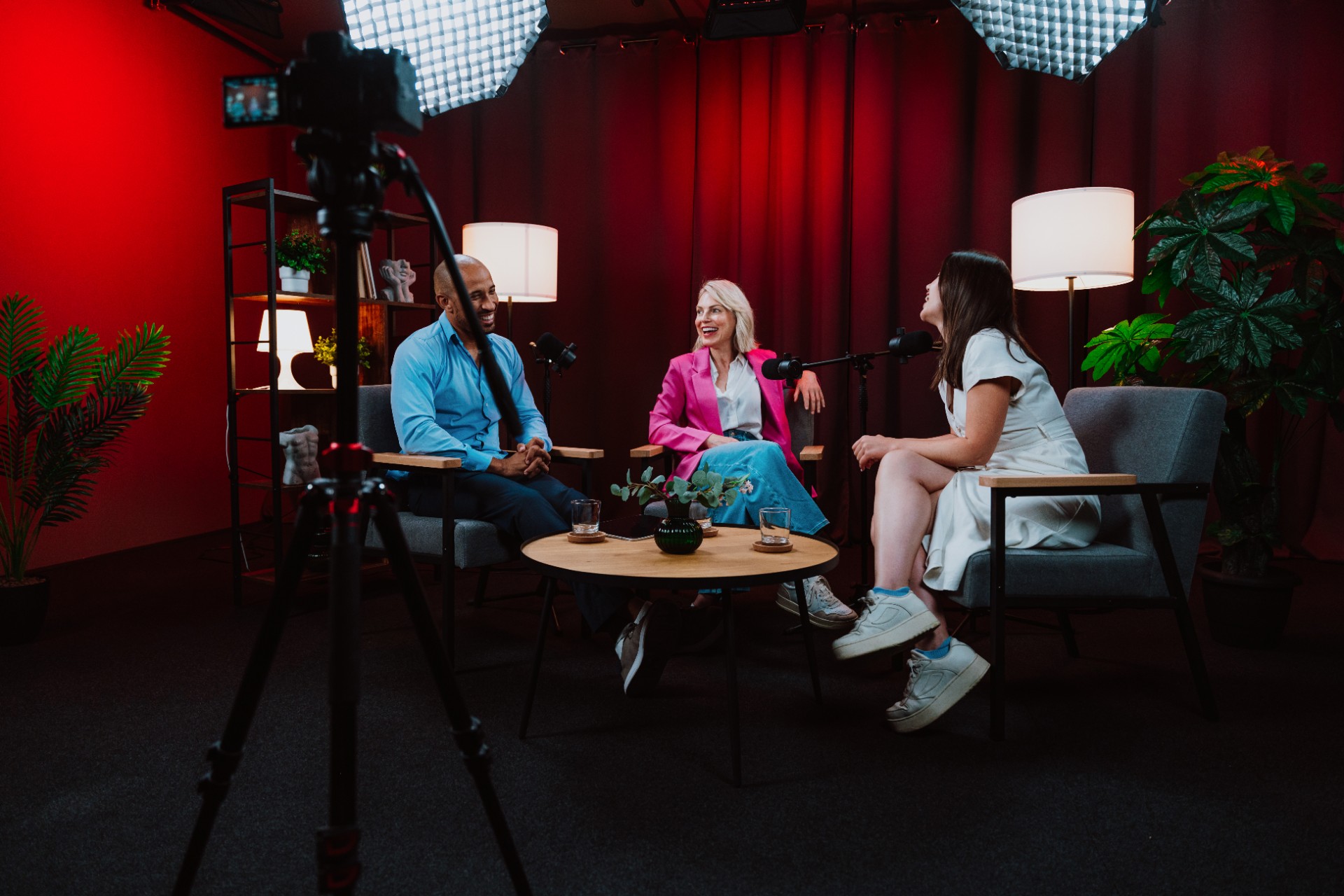
Recording a podcast with multiple guests in the same studio is one of the most creatively rewarding formats available to podcast hosts and also one of the most technically demanding to execute correctly. The dynamic energy of a multi-person conversation, the spontaneous exchanges between guests who are engaging with each other's ideas in real time, and the layered perspectives that emerge when multiple experts or practitioners encounter the same topic simultaneously create content that no sequence of one-on-one interviews can replicate.
But that same dynamic energy creates specific technical challenges that a one-on-one recording setup does not face. Multiple microphones in close proximity to multiple speakers create the potential for audio bleed between channels, where each microphone captures not only the speaker in front of it but the voices of every other speaker in the room. Multiple people speaking simultaneously create level management challenges that require careful gain staging before the session begins. Multiple camera angles for multiple subjects require more sophisticated visual coverage than a two-person setup. And the conversational dynamics of multiple participants require more active hosting management than a one-on-one interview to ensure that every participant is heard and that the conversation develops coherently rather than fracturing into competing threads.
Understanding how to address each of these challenges before the session begins is what separates a multi-guest recording that is technically and editorially excellent from one that is chaotic, hard to edit, and difficult to listen to.
Planning the Multi-Guest Session: The Decisions That Determine Everything Else
The quality of a multi-guest recording is largely determined by decisions made before the session begins. The technical setup, the seating arrangement, the episode structure, and the guest preparation all need to be considered in advance rather than improvised on the day.
Determining the Optimal Number of Guests
The first planning decision for a multi-guest recording is determining how many guests the session should include. This decision should be made on the basis of what genuinely serves the content rather than on a desire to maximize the number of voices in the room.
Two guests plus the host, for a total of three people in the conversation, is the most manageable multi-person format and the one that most reliably produces coherent, well-structured conversations. With three participants, the conversational dynamics are complex enough to be interesting but manageable enough for the host to facilitate effectively. Each participant has enough speaking time to develop their ideas with genuine depth. And the audio and video setup remains straightforward enough to execute at professional quality without exceptional technical complexity.
Three guests plus the host, for a total of four people, creates significantly more complex conversational dynamics and a meaningfully more demanding technical setup. The probability of participants speaking simultaneously increases with each additional participant. The time available for each participant to develop their ideas decreases as the total number of voices increases. And the host's facilitation challenge of managing the balance of contributions across four participants is substantially greater than across three.
Four or more guests plus the host should be approached with careful consideration of whether the additional participants genuinely add value that could not be achieved with fewer voices, because the technical complexity, the conversational management demands, and the risk of producing an episode that feels crowded and superficial all increase significantly with each additional participant.
Designing the Episode Structure for Multiple Participants
A multi-guest episode without a clear structural design produces exactly the chaos that the format risk implies: multiple people talking at once, participants who dominate the conversation while others barely contribute, and a discussion that moves across many topics without developing depth on any of them.
The structural design of a multi-guest episode should explicitly address how the floor will be managed, how the host will ensure that each participant's specific perspective is drawn out on each major topic, and how transitions between topics will be managed to maintain the episode's coherence across the full duration.
The most effective structure for a multi-guest episode establishes a clear central question or theme that all participants address from their respective vantage points, moves through a sequence of specific sub-topics that are defined in advance rather than allowing the conversation to wander organically, and includes deliberate moments where the host explicitly invites specific participants to respond to what another has said, creating the genuine exchange of perspectives that makes multi-guest conversations valuable.
This structured approach does not eliminate spontaneity. It creates the framework within which genuine spontaneous exchanges can develop without the conversation losing its direction or one participant monopolizing the floor.
Technical Setup for Multi-Guest Studio Recording
The technical setup for a multi-guest recording session is the foundation on which everything else rests. A correctly configured technical setup makes the conversation easy to record, easy to edit, and easy to listen to. An incorrectly configured setup creates problems in all three areas that cannot be fully corrected in post-production.
Microphone Selection and Placement for Multiple Speakers
The most important technical decision in a multi-guest setup is the microphone selection and placement configuration. Each participant should have their own dedicated microphone positioned to capture their voice as the primary input while minimizing the capture of other participants' voices.
Directional microphones, specifically cardioid dynamic microphones, are the most appropriate choice for multi-participant studio recording because their directional pattern rejects sound arriving from the sides and rear while capturing sound arriving from the front. When positioned correctly in front of each participant, cardioid microphones capture that participant's voice as the primary signal while rejecting a meaningful proportion of the other participants' voices that arrive from off-axis directions.
The distance between each microphone and the speaker it is assigned to should be minimized to maximize the ratio of direct voice to off-axis bleed. A microphone positioned ten centimeters from the speaker's mouth captures the speaker's voice at a significantly higher level relative to the room sound and the other speakers' voices than a microphone positioned thirty centimeters away.
The physical arrangement of participants around the recording table should be designed to maximize the angular separation between each speaker and each other participant's microphone. Participants seated directly across from each other will have each other's voice arriving on-axis to their respective microphones, creating maximum bleed. Participants seated at angles to each other will have each other's voice arriving at greater off-axis angles, reducing bleed.
For podcast creators in Mumbai who want their multi-guest recordings configured correctly from the outset, Fox Talkx Studio provides professional multi-guest recording setups with individual microphone assignments for each participant. Explore professional multi-guest podcast recording at https://www.foxtalkxstudio.com/.
Multi-Track Recording: Why It Is Non-Negotiable for Multi-Guest Sessions
Multi-track recording, where each participant's microphone is recorded to its own independent audio track simultaneously, is not optional for a multi-guest podcast recording session. It is a fundamental requirement for producing a finished episode of professional quality.
The reason is simple: with each participant on a separate track, the post-production editor can adjust the level of each participant independently, apply different audio processing to each voice as its individual recording quality requires, and manage the balance between participants through the editing rather than being locked into the balance captured at the time of recording.
Without separate tracks, all participants are mixed together in the recording and any level imbalances, processing differences between voices, or moments where one participant speaks significantly louder than others cannot be corrected in post-production. The mix is fixed at the recording stage rather than being adjustable in editing.
For a two-participant recording, the absence of separate tracks is a significant limitation. For a multi-guest recording with three or more participants, it makes professional-quality post-production essentially impossible.
Managing Gain Levels for Multiple Participants
Each participant in a multi-guest recording session will have a different natural speaking volume, a different distance from the microphone, and a different vocal character that requires a different gain setting to produce a well-balanced recording. Setting the gain levels before the session begins, with each participant speaking at their natural volume, is an essential pre-recording technical step that prevents level imbalances in the recordings.
The gain should be set so that each participant's loudest expected speaking level reaches approximately minus six decibels on the recording level meter, with sufficient headroom for unexpected increases in volume. If any participant is speaking at a significantly different volume from the others, adjusting their microphone gain rather than asking them to change their speaking volume produces a better result because natural speaking volume is more consistent than consciously adjusted volume.
Headphone Monitoring for Multi-Participant Sessions
In a multi-participant recording session, each participant benefits from being able to hear themselves and the other participants clearly through headphones during the recording. This monitoring allows participants to hear when they are speaking over another participant and to adjust their contributions accordingly, and it creates the sense of conversational presence that allows the participants to engage naturally with each other rather than struggling to hear across a recording table.
Professional studio headphone monitoring systems for multi-participant sessions allow each participant to have an independent headphone mix with the balance between their own voice and the other participants adjusted for their comfort. Some participants prefer to hear more of their own voice in the mix; others prefer less. Individual monitoring control allows each participant to set up the monitoring that allows them to perform most naturally.
Camera Setup for Multi-Guest Video Recording
The video coverage of a multi-guest recording requires more cameras and more thoughtful positioning than a two-person setup, because the conversation can move between multiple participants at any moment and the visual coverage needs to allow the editor to follow the conversation wherever it leads.
The Essential Camera Angles for a Three or Four Person Recording
A professional multi-guest recording setup typically requires a minimum of four camera angles for a three-person setup or five cameras for a four-person setup to provide adequate visual coverage for post-production editing.
The wide establishing shot captures all participants simultaneously from a position that shows the full group arrangement. This shot is used for moments when the group is engaged in shared discussion and for transitions between sections of the conversation where the visual context of the full group is editorially useful.
Individual medium shots for each participant capture each person from approximately chest height to slightly above the head, centered in the frame, from a slightly off-center angle that is more visually interesting than a direct frontal shot. These shots are the primary working shots for the edit, used when a specific participant is speaking or when their reaction to another participant's statement is editorially significant.
A two-shot covering two specific participants, typically the host and the primary guest or the two guests who are most frequently in dialogue with each other, provides a useful intermediate framing between the wide group shot and the individual shots.
With these angles covered, the post-production editor has the visual material to create a finished episode that follows the conversation visually with the variety and specificity that professional podcast video editing requires.
Managing Multiple Camera Feeds During Recording
With four or more cameras recording simultaneously, the management of multiple camera feeds during the session requires either dedicated camera operators for each camera or a carefully configured static camera setup that positions each camera at its optimal angle before recording begins and requires no adjustment during the session.
Static camera setups with carefully positioned cameras are the most common approach in professional podcast studios for multi-guest recordings because they eliminate the need for multiple camera operators while ensuring that each camera is always on the correct angle. The cameras are positioned, focused, and exposed before the session begins and then left to record continuously through the session.
This static approach works effectively when the participants remain in consistent positions during the recording. For sessions where participants shift positions significantly, camera operators may be needed to follow the participants and maintain appropriate framing through the session.
Managing the Conversation: The Host's Most Important Role
The technical setup and camera coverage create the conditions for an excellent multi-guest recording, but the quality of the conversation itself depends on the host's ability to manage the conversational dynamics of multiple participants effectively.
Establishing Ground Rules Before Recording Begins
The most efficient way to manage multi-participant conversational dynamics is to establish clear ground rules before the recording begins rather than trying to manage problems as they arise during the session.
Before the microphones are live, the host should briefly explain to all participants how the conversation will be managed: that the host will occasionally intervene to ensure that each participant has the opportunity to speak, that participants should avoid speaking simultaneously where possible, that hand signals or other non-verbal cues will be used to indicate when a participant wants to contribute, and that the host may occasionally ask a specific participant a directed question to draw out their perspective on a topic where they have not yet spoken.
These ground rules feel slightly formal in the moment of explanation but save significant conversational disruption during the recording by establishing shared expectations that all participants can follow voluntarily rather than requiring constant intervention.
Balancing Participation Across All Guests
The most common conversational management challenge in multi-guest recordings is the imbalance of participation: one or two guests who are naturally more assertive or more verbally fluent dominate the conversation while quieter participants contribute far less than their expertise or perspective warrants.
The host who does not actively manage this imbalance will produce a recording where the final episode sounds like a conversation between the host and one dominant guest with occasional interjections from the others. This is not only editorially poor but is unfair to the participants who were invited to contribute and whose perspectives are not fully represented in the final episode.
Managing participation balance requires the host to develop awareness of which participants have not recently contributed, to create deliberate openings for those participants with directed questions, and to gently but firmly redirect conversations that are developing into bilateral exchanges between two participants to the exclusion of the others.
Managing Simultaneous Speaking and Crosstalk
Simultaneous speaking and crosstalk, where multiple participants speak at the same time, are the most practically disruptive events in a multi-guest recording because they create audio that is difficult or impossible to make intelligible in post-production and that breaks the conversational flow that makes the finished episode enjoyable to listen to.
Some degree of overlapping speech is natural in animated conversations and should not be so aggressively suppressed that the conversation feels artificially stilted. But extended simultaneous speaking where multiple participants are developing competing points simultaneously should be managed by the host intervening briefly to direct the floor to a single speaker.
The most effective intervention for simultaneous speaking is a brief, natural verbal acknowledgment of both speakers: "you both have a point here, let's take them one at a time, let's start with you" directed to one speaker, then after that speaker finishes, "and you were saying," directed to the other. This intervention is gentle enough not to break the conversational energy but clear enough to restore single-speaker order.
Post-Production Considerations for Multi-Guest Recordings
Multi-guest recordings present specific post-production considerations that differ from two-person recordings and that should be anticipated during the recording session to minimize the editing challenges they create.
The Level Balancing Challenge
With three or more participants on separate tracks, the level balancing that produces a consistently balanced mix in the finished episode requires more work than a two-person recording. Each participant's track needs to be processed independently to achieve a consistent perceived loudness, and the relationship between tracks needs to be managed so that no single participant consistently dominates or recedes in the mix.
The starting point for this level balancing is the gain settings established during the pre-recording setup, which should ensure that all tracks begin at approximately the same level. From this baseline, compression on each track manages the dynamic variation within each participant's contribution, and fader automation in the editing timeline manages the balance between participants at specific moments where the default balance needs adjustment.
Managing Crosstalk in Editing
The crosstalk moments that inevitably occur in multi-participant conversations require specific editorial treatment in post-production. When two participants speak simultaneously for a brief moment, the editor must decide whether to keep the moment as captured, which preserves the natural conversational energy of the overlap but may make one or both participants difficult to understand, or to manage the moment by reducing the level of one track during the overlap to emphasize the other.
The editorial decision should be guided by which participant's contribution during the overlap is more important to the episode's content. If one participant is making a significant point during the overlap, that track should be emphasized and the other reduced. If neither participant is making a significant point and the overlap is simply a reflexive interjection, keeping both at equal levels or reducing both slightly may be appropriate.
For podcast creators in Mumbai who want their multi-guest recordings edited professionally with expert handling of level balancing, crosstalk management, and all other multi-track post-production challenges, Fox Talkx Studio provides comprehensive podcast editing services that take multi-guest recordings from raw files to finished episodes. Discover professional multi-guest podcast production at https://www.foxtalkxstudio.com/.
Logistics: Making Multi-Guest Sessions Run Smoothly
Beyond the technical and editorial dimensions of multi-guest recording, the logistical management of sessions with multiple participants requires specific attention to ensure that the session runs efficiently and that all participants have a positive experience.
Scheduling Coordination for Multiple Participants
Coordinating the schedules of multiple guests for a single recording session is the first and often most challenging logistical task. The probability of scheduling conflicts increases with each additional participant, and identifying a time that works for all participants may require extended back-and-forth that delays the session.
Using a scheduling tool that allows all participants to indicate their availability simultaneously, rather than sequential back-and-forth communication, reduces the time required to identify a mutually available slot. Providing participants with two or three specific time options rather than open-ended availability requests also simplifies the coordination by limiting the decision space.
Booking the studio for slightly more time than the estimated session duration provides a buffer for the inevitable delays of assembling multiple participants and allows the session to run slightly over time without creating pressure to cut the conversation short.
Pre-Session Communication With All Participants
A clear pre-session communication sent to all participants with the practical information they need, including the studio address, parking or transport options, what to wear for video recording, the episode's topic and central question, and the expected session duration, reduces the logistical friction of assembling multiple people in a new environment and ensures that all participants arrive prepared and on time.
Key Takeaways
Recording a podcast with multiple guests in the same studio produces the dynamic, multi-perspective content that no sequence of one-on-one interviews can replicate, but it requires more careful planning, more sophisticated technical setup, and more active conversational management than two-person recording.
The planning decisions that most significantly determine the quality of the session are the number of guests, which should be limited to what genuinely serves the content rather than maximizing voices, and the episode structure, which should explicitly address how the floor will be managed and how each participant's perspective will be drawn out on each major topic.
The technical setup must include individual dedicated microphones for each participant, multi-track recording that gives each participant their own independent audio track, carefully managed gain levels for each participant, and individual headphone monitoring. Camera coverage must provide the wide establishing shot, individual medium shots for each participant, and intermediate two-shots needed for comprehensive visual coverage of the conversation.
The host's conversational management, including pre-recording ground rules, active participation balancing, and gentle management of simultaneous speaking, determines whether the conversational dynamics of multiple participants produce rich, layered content or chaotic, difficult-to-edit recordings.
For podcast creators in Mumbai who want multi-guest recording sessions managed with professional technical and logistical expertise from setup through delivery, Fox Talkx Studio provides the complete production infrastructure and editorial support for multi-guest podcast recordings of every scale and format. Visit https://www.foxtalkxstudio.com/ to explore what professional multi-guest podcast recording looks like for your show.