
Podcast Equipment in India 2026: Every Budget Covered
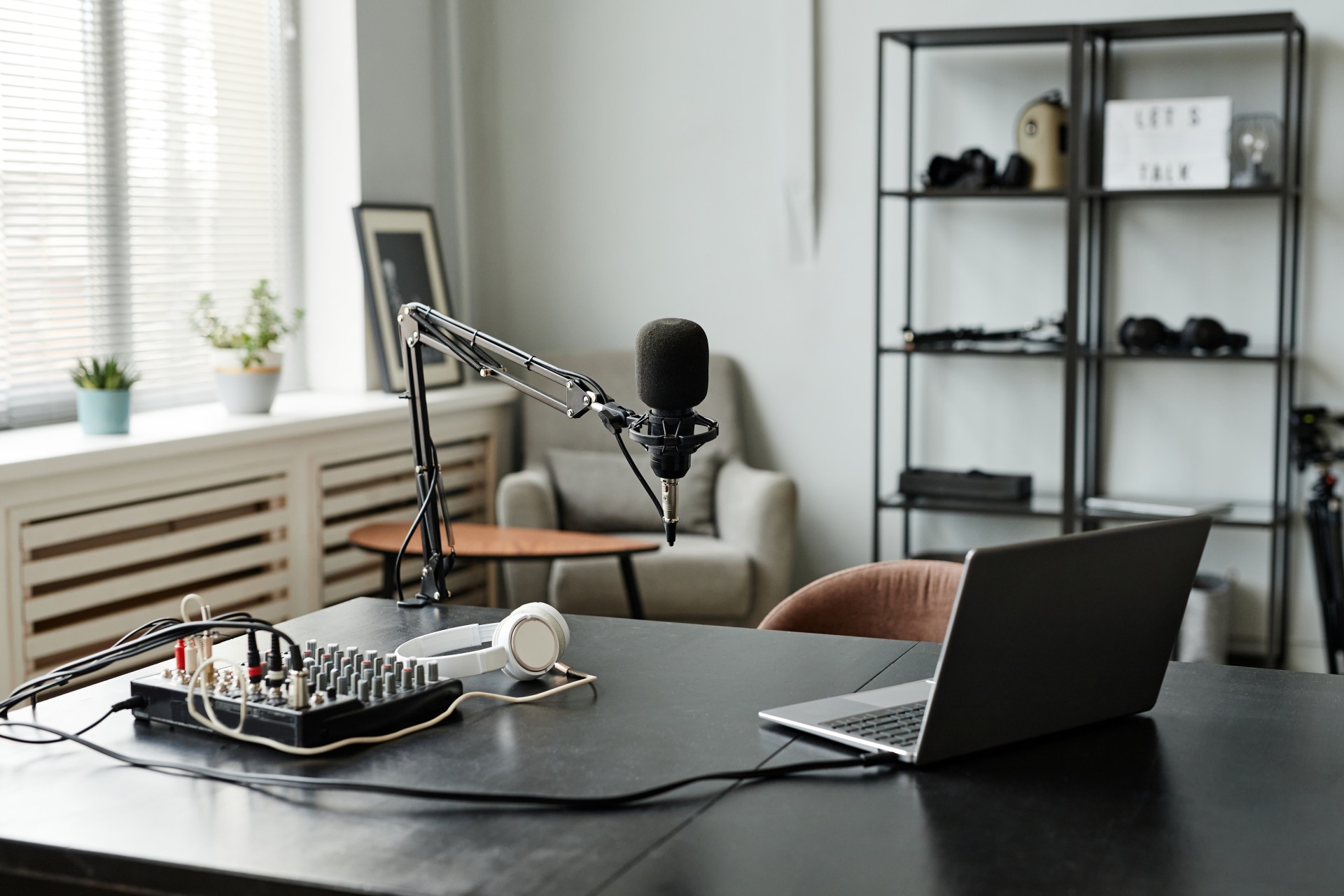
The podcasting space in India has grown at a pace that few industries can match. From solo creators recording in bedroom studios to corporate teams launching branded audio shows, the demand for reliable, good-sounding podcast equipment has never been higher. But navigating the Indian market in 2026 is not straightforward. Prices vary wildly across platforms, import duties affect availability, and the sheer volume of options can make even an experienced creator second-guess their choices.
This guide cuts through the noise. Whether you are just starting out with a tight budget or ready to invest in a professional-grade setup, here is exactly what to buy, what to skip, and how to get the best sound for your money.
Why Podcast Equipment Choices Matter More in 2026
Before diving into product recommendations, it helps to understand what has changed in the Indian podcasting landscape this year. Listeners have become more discerning. The days when a smartphone recording could compete on Spotify or JioSaavn are largely over for anyone serious about building an audience. Audio quality is now a credibility signal, and poor sound can cause listeners to drop off within the first 60 seconds.
At the same time, the market has matured. Brands like Rode, Shure, Audio-Technica, and Blue have established stronger distribution networks in India, meaning you no longer have to wait weeks for a grey-market import. Local stores in Mumbai, Bengaluru, Delhi, and Hyderabad now stock a reasonable range, and platforms like Amazon India and Flipkart have made price comparisons easier than ever.
That said, setting up a studio is still a process with real learning curves. If you want to skip the trial-and-error phase entirely, working with a professional podcast studio is often the smarter move. Fox Talkx Studio offers end-to-end podcast production services built specifically for Indian creators and brands, so you can focus on your content while the technical side is handled for you. Explore what that looks like at Fox Talkx Studio's services page.
Understanding the Three Budget Tiers
For the purpose of this guide, podcast equipment setups in India in 2026 fall into three broad categories:
- Entry level: Under Rs. 15,000 for the full setup
- Mid-range: Rs. 15,000 to Rs. 60,000
- Professional: Rs. 60,000 and above
Each tier has a clear use case, and jumping to a higher tier prematurely does not always result in better content. The right equipment is the equipment that matches your current stage, your recording environment, and your publishing goals.
Entry-Level Podcast Setup in India (Under Rs. 15,000)
Who This Tier Is For
This budget range suits first-time podcasters, students, hobbyists, and anyone who wants to test the format before making a larger financial commitment. You will not get broadcast-quality audio here, but with the right gear and a treated recording space, you can produce content that sounds clean and professional enough for most platforms.
Microphone: The Fifine K669B or HyperX SoloCast
The Fifine K669B remains one of the best-selling USB microphones in India for a reason. Priced at around Rs. 2,500 to Rs. 3,000, it plugs directly into your laptop or desktop, requires no audio interface, and delivers a warm, full sound for spoken word content. It is a cardioid condenser mic, which means it picks up primarily what is in front of it and rejects most room noise from the sides and rear.
If your budget stretches slightly further, the HyperX SoloCast (around Rs. 5,000 to Rs. 6,000) offers a more refined frequency response and a tap-to-mute function that comes in handy during live sessions or interview recordings.
Headphones: OneOdio Studio Pro 10
Good monitoring headphones are non-negotiable even at this budget tier. The OneOdio Studio Pro 10, available for around Rs. 1,500 to Rs. 2,000, gives you a reasonably flat sound signature that helps you hear your audio accurately rather than with artificial bass boost. Avoid consumer-grade headphones from brands targeting music listeners when you are monitoring for podcast recording.
Acoustic Treatment: DIY and Low-Cost Options
At this budget, spending on acoustic foam panels is worth every rupee. A basic set of 12 panels (typically 30 x 30 cm each) costs between Rs. 800 and Rs. 1,500 on Amazon India. Place them on the wall behind your microphone and on side walls to reduce flutter echo. Alternatively, recording inside a wardrobe filled with clothes creates a surprisingly effective dead room.
Recording and Editing Software
Audacity is free, open-source, and handles basic recording and editing with no steep learning curve. GarageBand is free for Mac users and offers slightly more polished tools. At this budget tier, there is no need to spend on software.
Total estimated cost: Rs. 8,000 to Rs. 12,000
Mid-Range Podcast Setup in India (Rs. 15,000 to Rs. 60,000)
Who This Tier Is For
This is where most serious independent podcasters and small media businesses land. The mid-range tier delivers audio that can genuinely compete with top-charting Indian podcasts, provided your room acoustics are reasonable. It also gives you enough flexibility to record multi-guest episodes and handle more complex production workflows.
Microphone: Rode PodMic or Audio-Technica ATR2100x
The Rode PodMic is arguably the most popular microphone in Indian podcast studios right now, and for good reason. Priced at around Rs. 14,000 to Rs. 16,000, it is a dynamic microphone with excellent off-axis rejection, meaning it picks up your voice clearly while rejecting keyboard clicks, air conditioning noise, and other ambient sounds that plague untreated rooms. Dynamic mics are almost always a better choice than condenser mics in rooms without proper acoustic treatment.
The Audio-Technica ATR2100x is a strong alternative at a slightly lower price point (around Rs. 8,000 to Rs. 10,000). It offers both USB and XLR connectivity, making it a bridge between entry-level and more advanced setups.
Audio Interface: Focusrite Scarlett Solo (4th Gen)
Once you move to an XLR microphone like the Rode PodMic, you need an audio interface. The Focusrite Scarlett Solo (4th Gen) is the industry standard recommendation at this tier, priced at approximately Rs. 10,000 to Rs. 12,000 in India. It converts the analog signal from your microphone to digital audio, gives you control over gain levels, and significantly reduces latency during recording. The preamps in the Scarlett Solo are clean, quiet, and consistent.
Headphones: Sony MDR-7506
The Sony MDR-7506 is a workhorse headphone that has been used in professional broadcast environments for decades. Available in India for around Rs. 7,000 to Rs. 9,000, it has an accurate, slightly analytical sound signature that is ideal for catching sibilance, room noise, and other audio issues during recording and editing. It is comfortable enough for long sessions and folds flat for easy storage.
Boom Arm and Pop Filter
A boom arm like the Rode PSA1 (around Rs. 9,000) or the more affordable Innogear Heavy Duty arm (around Rs. 2,000) keeps your microphone off the desk, reducing vibration and allowing you to position it correctly at mouth level. A pop filter (Rs. 300 to Rs. 800) prevents plosive sounds from blowing out peaks on your waveform.
Recording Software: Adobe Audition or Descript
At this budget tier, investing in better software starts to make sense. Adobe Audition (part of the Creative Cloud subscription) offers powerful noise reduction, multitrack editing, and podcast-specific mastering tools. Descript is particularly popular among Indian creators for its transcript-based editing workflow, where you edit audio by editing text, dramatically cutting post-production time.
Total estimated cost: Rs. 35,000 to Rs. 55,000
If you are at this stage of investment and want guidance on putting together a setup that works for your specific content format and goals, the team at Fox Talkx Studio can advise you on the right combination of gear and workflow. Check out their full range of services at foxtalkxstudio.com/services.
Professional Podcast Setup in India (Rs. 60,000 and Above)
Who This Tier Is For
This tier is for full-time podcasters monetizing their shows, corporate content teams producing branded audio and video content, media agencies, and anyone who needs to deliver broadcast-standard output consistently. At this level, you are not just buying better gear, you are building a system.
Microphones: Shure SM7dB or Rode PodMic Pro
The Shure SM7B has long been the gold standard for professional podcast recording worldwide. In 2026, the updated Shure SM7dB (the version with a built-in active preamp) has made significant inroads in India, priced at around Rs. 35,000 to Rs. 40,000. Its internal preamp means it pairs well even with interfaces that have modest gain, which solves a common complaint about its predecessor requiring very high preamp levels.
The Rode PodMic Pro, announced in late 2024 and now widely available in India, is a strong competitor at a similar price range. Both are dynamic microphones with ultra-low self-noise and excellent proximity effect control.
For multi-guest setups, budget for two to four microphones of the same model to maintain consistent sound across speakers.
Audio Interface: Focusrite Scarlett 2i2 or RodeCaster Pro II
For solo recording, the Focusrite Scarlett 2i2 (around Rs. 14,000 to Rs. 16,000) gives you two XLR inputs and exceptional preamp quality. For multi-guest or hybrid remote interview setups, the RodeCaster Pro II (around Rs. 55,000 to Rs. 60,000) is a podcast-specific mixer that handles up to four XLR microphones simultaneously, integrates with remote call software, has built-in compression and EQ per channel, and includes programmable sound pads. It is a near-complete solution in one unit.
Acoustic Treatment: Professional Foam or Mass Loaded Vinyl
At this investment level, basic foam panels are not enough. You want a combination of absorption panels (for high-mid frequencies), bass traps (for corners where low-frequency buildup occurs), and diffusers (to maintain a sense of space without making the room sound dead). Brands like Auralex and GIK Acoustics ship to India, with basic room treatment packages starting at Rs. 20,000 to Rs. 40,000 depending on room size.
Alternatively, many professional podcasters in India are now building dedicated studio rooms using mass loaded vinyl for soundproofing and acoustic panels for treatment, which is a one-time investment that pays dividends over years of recording.
Video: For Video Podcasts
The video podcast format has become mainstream in India in 2025 and 2026, with platforms like YouTube significantly boosting discoverability for video-first shows. At the professional tier, a Sony ZV-E10 or Sony A7C with a quality lens (a 50mm f/1.8 is a reliable choice) paired with LED panel lighting gives you a clean, cinematic look. Budget an additional Rs. 50,000 to Rs. 80,000 for a two-camera video setup with basic lighting.
Total estimated cost: Rs. 1,00,000 to Rs. 2,50,000 depending on configuration
Key Accessories Indian Podcasters Often Overlook
Shock Mounts
A shock mount isolates your microphone from desk vibrations and handling noise. Most professional mics either include one or have a compatible option. Do not skip this, particularly if you are recording at a desk where you type, click, or shift your arms frequently.
Ethernet Over WiFi for Remote Recording
If you record remote interviews using platforms like Riverside.fm, Zencastr, or even Zoom, your internet connection quality directly affects your recording. A wired ethernet connection, even on a laptop using a USB-C to Ethernet adapter (Rs. 600 to Rs. 1,500), dramatically reduces packet loss and connection drops compared to WiFi. This is especially relevant in Indian metro apartments where WiFi interference from neighboring networks is a genuine problem.
Portable Recorders for On-the-Go Episodes
The Zoom H5 or Zoom H6 (Rs. 20,000 to Rs. 30,000) are exceptional portable recorders for journalists, field reporters, or podcasters who record interviews outside a studio. They accept XLR inputs, have built-in condenser mics for backup recording, and produce files that integrate smoothly into any editing workflow.
Should You Build Your Own Setup or Use a Studio?
This is a question more Indian creators are asking in 2026, and the honest answer is that it depends on your output frequency and budget spread.
If you publish once a week or less, and your initial investment in equipment is above Rs. 50,000, building a home studio likely makes financial sense over a 12-month horizon. But the hidden costs are real: acoustic treatment, learning curves, troubleshooting, and the time spent on production instead of content creation add up quickly.
For creators who publish frequently, work with multiple guests, need professional video alongside audio, or are producing branded content for clients, booking time at a professional studio or partnering with a full-service production team is often the better value proposition.
Fox Talkx Studio is built precisely for this use case. Whether you need a fully equipped studio space, end-to-end podcast production, or strategic content guidance for your show, their team works with creators and brands at every stage. You can learn more and get in touch at foxtalkxstudio.com/services.
Wrapping Up: Match Your Gear to Your Stage
The best podcast equipment is not the most expensive equipment. It is the setup that matches where you are right now, fits your recording environment, and does not create bottlenecks in your content workflow.
Start with the entry-level tier if you are testing the format. Move to mid-range once you have validated your concept and built a consistent publishing habit. Invest in professional gear or a professional partner when your show has a clear audience, a monetization path, or a brand reputation to protect.
The Indian podcasting audience is growing, discerning, and loyal to creators who take their craft seriously. Good audio is one of the clearest signals that you do. Choose your setup accordingly, and do not hesitate to lean on professionals like Fox Talkx Studio when it makes sense. Their services are available at foxtalkxstudio.com/services for creators ready to take the next step.