
Home Studio vs Renting a Professional Studio: Guide
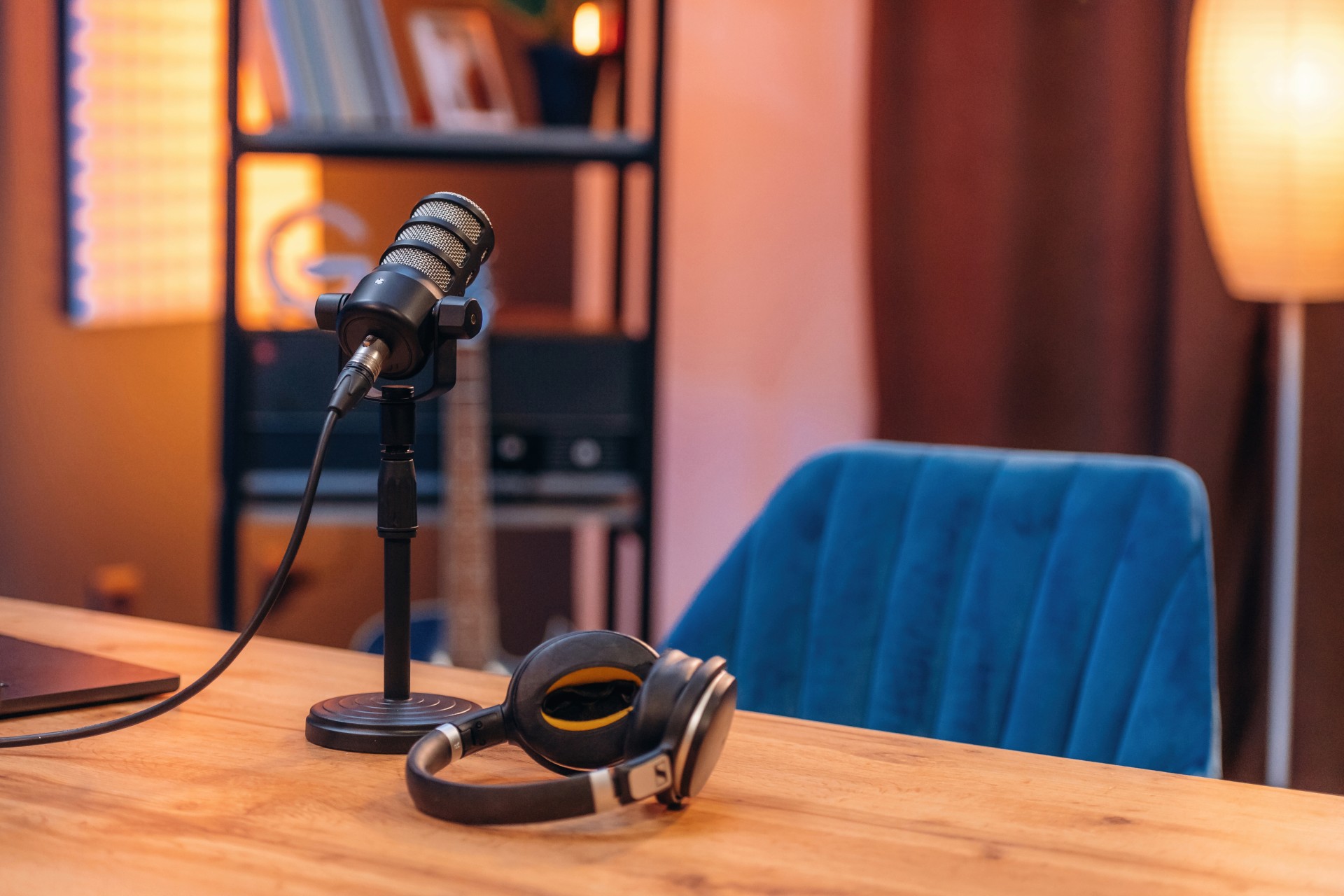
Starting a podcast is one of the most exciting creative decisions you can make. But before you record a single word, you face one of the most practical questions in the game: where do you actually record? Do you carve out a corner of your apartment, treat it with foam panels, and build your own setup? Or do you walk into a professional studio, sit behind a broadcast-grade microphone, and let someone else handle the acoustics?
Both paths are legitimate. Both have produced wildly successful shows. But the right answer depends entirely on your goals, your budget, your content style, and how serious you are about the long game. This guide walks you through every major consideration so you can stop second-guessing and start recording.
The Real Cost of Building a Home Podcast Studio
When people imagine setting up a home studio, they tend to underestimate what it actually costs to do it well. A decent USB microphone, a pair of headphones, and free recording software like Audacity can get you started for under $200. But "started" and "professional-sounding" are very different benchmarks.
Entry-Level Home Setup: What You Actually Need
At the bare minimum, a home podcast studio requires a quality microphone (ideally an XLR condenser or dynamic mic), an audio interface, a pair of closed-back headphones, recording and editing software, and a pop filter or shock mount. Budget-conscious creators can assemble a functional rig for around $300 to $600. At this tier, you will likely encounter room noise, echo, and inconsistencies in your audio quality unless you also invest in acoustic treatment.
Mid-Range and Advanced Home Setups
Creators who want broadcast-level audio at home quickly discover that acoustic treatment becomes the biggest hidden cost. Soundproofing panels, bass traps, and diffusers can run anywhere from $300 to $2,000 or more depending on the size of your space. Add a quality XLR microphone in the $200 to $500 range, a reliable audio interface, studio monitors, and subscription-based editing software, and your total investment can easily climb to $2,000 or beyond before you have recorded a single episode.
And that figure does not include the time you will spend learning to use everything properly.
Ongoing Home Studio Costs
Beyond the initial purchase, home studios come with ongoing costs that are easy to overlook: software subscription renewals, equipment upgrades as your skills grow, replacement cables and accessories, and potential room renovation expenses if your space is not acoustically suitable. If you live in a shared apartment or a noisy neighborhood, background noise may force you to record late at night or invest in additional soundproofing.
The Real Cost of Renting a Professional Studio
Professional podcast studios charge by the hour or by the session, and pricing varies significantly depending on your city, the studio's equipment, and what services are included. Hourly rates typically range from $25 to $150 per hour, with many studios offering package deals for regular clients.
What You Get When You Rent
The value of renting a professional studio goes far beyond access to expensive microphones. When you walk into a space like Fox Talkx Studio, you are stepping into an environment that has been purpose-built for audio excellence. The room has been treated acoustically by professionals. The signal chain from microphone to recording software has been calibrated and tested. The monitoring system lets you hear exactly what your listeners will hear.
Many studios also provide a producer or audio engineer to manage levels, flag technical issues in real time, and ensure your session runs smoothly. For creators who are still learning the technical side of podcasting, this support alone can be worth the rental fee.
If you are ready to experience what a properly designed studio environment sounds like, explore the session options at Fox Talkx Studio to find a package that fits your schedule.
Calculating the Long-Term Studio Rental Cost
If you produce one episode per week and each recording session takes two hours, renting at $50 per hour means spending $100 per session, which adds up to roughly $400 to $500 per month depending on the number of sessions. Over a year, that comes to around $4,800 to $6,000.
At first glance, building a home studio might seem more cost-effective in the long run. But when you factor in the upfront investment, ongoing maintenance, the learning curve, and the opportunity cost of time spent troubleshooting gear instead of creating content, the math gets more nuanced.
Sound Quality: Where the Gap Is Real
This is the category where professional studios have a clear and significant advantage, at least for most creators starting out.
Acoustics Are Not Just About Equipment
The single biggest factor in podcast audio quality is not the microphone. It is the room. A $1,500 microphone in an untreated room will sound worse than a $300 microphone in a professionally treated recording booth. The reverb, flutter echo, low-frequency buildup, and ambient noise present in most home environments are the enemies of clean, polished audio.
Professional studios invest heavily in acoustic design. Walls are built with decoupled construction to prevent sound transmission. Ceilings are treated with diffusers and absorbers. HVAC systems are quiet or isolated. Every element of the room is designed to give you a neutral, accurate sonic environment where your voice sounds its best.
Post-Production vs. Getting It Right at the Source
Home studio creators often rely on post-production noise reduction and EQ to fix problems that originated in a poor acoustic environment. This approach works up to a point, but it has limits. Heavy noise reduction can introduce artifacts that make your voice sound processed or unnatural. Fixing a bad recording in editing is always harder and less satisfying than recording it well in the first place.
When you record in a professional environment, you spend less time editing and more time publishing. That efficiency compounds over hundreds of episodes.
Flexibility and Scheduling: Understanding Your Workflow
The Freedom of Recording Anytime at Home
One of the most compelling arguments for a home studio is that it is always available. You can record at 11 PM on a Tuesday. You can re-record a single line without booking a session. You can experiment freely without worrying about time costs.
For solo podcasters who produce highly edited, narrative-style shows, this flexibility is invaluable. The ability to record in small bursts and piece together an episode over multiple sessions suits many creative workflows perfectly.
Guest Interviews and Multi-Person Sessions
If your format involves regular guests, co-hosts, or panel discussions, a home studio introduces real logistical challenges. You need multiple microphone setups, enough physical space, and acoustic treatment that holds up when multiple people are speaking simultaneously. Recording remote guests through platforms like Riverside or Zencastr solves the attendance problem but introduces a different set of audio quality variables.
A professional studio handles multi-person sessions with ease. Most setups include multiple broadcast microphones, separate headphone mixes for each participant, and enough space to accommodate several guests comfortably. For shows that prioritize in-person conversation, a studio environment often produces measurably better results.
Fox Talkx Studio is designed to support exactly these kinds of sessions. If you host interviews or panel discussions, take a look at the available services to see how a professional environment can elevate your content.
Brand Perception and Audience Expectations
Does Production Quality Matter to Listeners?
The honest answer is: yes, and increasingly so. As podcasting has grown from a niche hobby into a major media format, listener expectations have risen. A show with muddy audio, noticeable echo, or inconsistent levels signals to listeners that the creator is not fully invested. That perception can affect subscriber growth and episode completion rates.
This does not mean every podcast needs broadcast-network production values. But there is a baseline of audio quality that modern listeners expect, and falling below it creates friction that works against you.
The Professional Studio as a Brand Signal
Recording in a professional studio is also a statement about your brand. When you publish content that sounds polished and deliberate, you communicate that you take your show seriously. That credibility extends to potential sponsors, guests, and collaborators who are evaluating whether your podcast is worth their time and association.
Some creators even mention or show their studio environment as part of their content, treating the recording space as an element of their brand identity.
Technical Support and Learning Curve
Home Studio: The DIY Learning Curve
Building and operating a home studio requires you to become competent in several disciplines simultaneously: microphone technique, gain staging, audio interface configuration, digital audio workstation operation, editing, mixing, and sometimes basic acoustic treatment installation. This is not an impossible learning curve, but it is a real one.
Many new podcasters spend their first several months publishing episodes that are technically subpar while they learn. Some find the technical challenge genuinely enjoyable. Others find it distracting from what they actually care about, which is the content itself.
Professional Studio: Focus on the Content
When you rent a professional studio, the technical burden shifts. You show up, sit at a properly configured microphone, and focus entirely on your performance and your message. The engineer handles levels, monitors for clipping or noise issues, and ensures you leave with clean files ready for editing or publishing.
This is particularly valuable for creators who are new to podcasting, who are recording a high-stakes episode, or who simply prefer to keep their cognitive bandwidth focused on content rather than equipment.
If you would rather spend your studio time talking instead of troubleshooting, the team at Fox Talkx Studio is built to support that experience from start to finish.
Who Should Build a Home Studio
A home studio makes the most sense for you if several of the following conditions apply. You are a solo podcaster with a consistent schedule and enough space to dedicate a quiet room to recording. You enjoy learning audio production and view it as a valuable skill in its own right. You are producing a high volume of content, meaning the per-episode cost of studio rental would become prohibitive over time. You are comfortable with the upfront investment and have a realistic plan for acoustic treatment in your space.
Home studios are also well-suited for creators whose content does not demand pristine production quality, such as casual conversation shows, journaling-style audio, or educational content where the information itself carries more weight than the production.
The Hybrid Approach Worth Considering
Many experienced podcasters use a hybrid model. They record day-to-day episodes at home and book professional studio time for milestone episodes, season premieres, high-profile guest interviews, or promotional content. This approach gives them the cost efficiency of a home setup for routine production and the quality ceiling of a professional studio when it matters most.
Who Should Rent a Professional Studio
Renting a professional studio is likely the better choice if your podcast is interview-focused and you regularly bring guests in person. It also makes sense if audio quality is central to your brand positioning and you cannot afford to compromise on that front.
Creators who are just getting started and want to avoid the steep technical learning curve will benefit significantly from a professional environment. The same applies to those producing sponsored content or pitching to advertisers where production quality will be evaluated as part of the deal.
If you are a business using a podcast as a content marketing channel, the professional studio option also reduces execution risk. Every episode that goes out under your brand is an asset, and producing it in a purpose-built space gives you greater consistency and control.
Podcasters in Mumbai and surrounding areas who are looking for a professional recording environment with the right infrastructure can explore what Fox Talkx Studio offers at foxtalkxstudio.com/services.
Making the Decision: A Practical Framework
Rather than thinking of this as a permanent either/or choice, approach it as a decision point you can revisit as your show grows. Here is a practical way to think through it:
Start with Your Current Episode Volume and Budget
If you are producing fewer than four episodes per month and your budget is limited, renting gives you professional quality without the upfront investment. If you are producing daily or multiple times per week, the math may favor building your own setup over time.
Assess Your Content Format Honestly
Solo monologue shows are more forgiving of home studio imperfections than interview-format shows where you have less control over the acoustic environment. Be honest about what your format demands rather than what you hope you can achieve.
Define Your Non-Negotiables
Some creators cannot tolerate inconsistent audio and find that it affects their motivation to produce. Others are comfortable iterating on their sound over months. Know which type you are before committing significant money in either direction.
Start with Studio Time, Then Decide
If you have never recorded in a professional studio, book a session before making any major home studio investment. The experience of recording in a well-treated room with quality equipment will calibrate your expectations and help you understand exactly what you would need to replicate at home, or whether replicating it is even practical.
The Bottom Line
There is no universally correct answer to the home studio versus professional studio question. What matters is that your recording environment serves your content, your workflow, and the expectations of your audience.
Home studios reward creators who are patient, technically curious, and producing high volumes of content over the long term. Professional studios reward creators who prioritize quality, want to focus on performance rather than production, and need a reliable, polished output from day one.
For many podcasters, particularly those who are serious about building an audience and treating their show as a genuine brand asset, the professional studio is the right starting point. It removes barriers, raises the quality ceiling, and lets you focus on what only you can do: tell your story.
If you are ready to record in a space that is built for exactly this purpose, visit Fox Talkx Studio and explore the recording packages available to you.