
How to Produce a Narrative or True-Crime Podcast: Research, Scripting and Sound
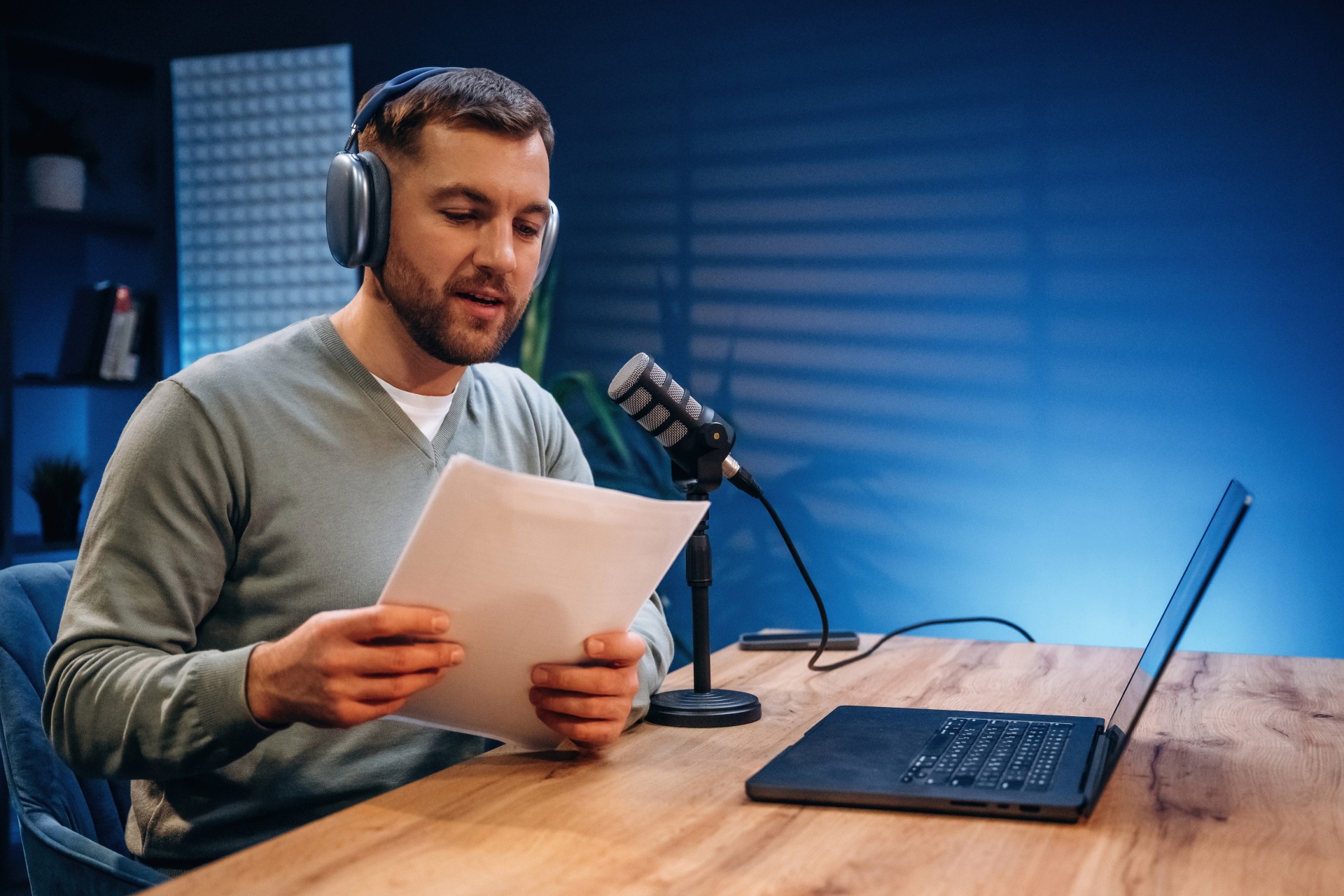
There is a meaningful difference between a podcast and a produced podcast. A conversation recorded and published is a podcast. A piece of audio that unfolds with intention, where every word is chosen, every sound is placed, and every moment of silence is deliberate -- that is a produced podcast. Narrative and true-crime shows sit firmly in the second category, and the gap between them and the average show is not mysterious. It is the product of three disciplines applied together: research that goes deeper than surface sources, scripting that transforms information into story, and sound design that makes the world of the story real for a listener who cannot see it.
Each of these disciplines has its own craft, its own toolkit, and its own failure modes that ruin otherwise strong episodes. Understanding all three, and understanding how they interact, is what separates narrative podcasts that build devoted audiences from ones that have strong concepts but do not quite land.
This guide covers the full production arc from first research to final mix, with enough practical detail to function as a working framework for your first narrative episode and a reference for improving episodes you are already producing.
Research: Building the Foundation That Makes Everything Else Possible
Narrative podcast research is different from research for a talk or interview show. In an interview show, your guest fills in the gaps your research leaves. In a narrative show, you are the only source of everything the listener hears. Every claim, every detail, every piece of colour that makes a story feel real and specific has to come from your research. The standard is higher because there is no safety net.
Primary sources before secondary sources. The discipline that separates serious narrative research from surface-level research is the commitment to going to primary sources -- court documents, official records, contemporaneous news coverage, firsthand accounts, raw data -- before accepting the secondary accounts that have already processed and interpreted those sources. Wikipedia, existing podcast treatments of a case, and published books are useful starting points for orientation. They are not adequate as the foundation of a show claiming to tell a story accurately.
For true-crime specifically, primary sources include court filings, judgments, and charge sheets for concluded cases; FIR records where accessible; contemporaneous newspaper coverage from the period of the events; and interviews with people directly involved. Each of these requires effort to access and verify. The effort is what separates a show whose research holds up from one that propagates errors that exist in every secondary source because no one went back to check.
Research organisation systems matter as much as research volume. A large unorganised body of research is harder to work with than a smaller organised one, and the scripting phase depends entirely on being able to find specific facts quickly when you need them. A system of episode research folders with sub-folders for verified facts, unverified claims, potential quotes, timeline events, and open questions creates the structured foundation that scripting needs. Many narrative podcast producers use research databases in tools like Notion or Airtable that allow filtering and cross-referencing across a large case body.
Interview research is a discipline of its own. When you are interviewing people for a narrative episode -- witnesses, experts, family members, investigators -- the quality of what you get depends on the quality of your preparation. Underprepared interview subjects give generic answers. Prepared interviewers who have done sufficient background work to ask specific, surprising questions get specific, surprising answers. For narrative podcasts, the goal of a research interview is not to find out what happened. It is to find the specific, concrete, sensory details that bring the story to life: what the room looked like, what was said in that specific moment, what the weather was, what the person was thinking when they made the decision.
Scripting: Turning Research Into Story
The transition from a body of research to a finished script is where most narrative podcast producers stall. The research is complete, the story is understood, and yet the page stays blank because the question of where to begin and how to structure what follows feels unanswerable.
The answer is almost always to start with the most compelling specific moment in the story -- not the beginning of the chronology, but the moment of highest dramatic stakes -- and work outward from there.
The cold open as a commitment device. The first sixty to ninety seconds of a narrative podcast episode need to make a specific promise to the listener: this is what this episode is about, this is why it matters, and this is worth your time. The most effective cold opens drop the listener into a specific moment with specific sensory detail and high stakes. They do not summarise what is coming. They create a question the listener needs to have answered.
A cold open that starts "In November 2019, a small accounting firm in Pune discovered that seventeen crores had disappeared from their accounts in the space of four days" is a cold open that creates an immediate question. A cold open that starts "Today we are going to be talking about a fraud case that shocked the financial world" is a cold open that tells the listener what they are about to hear rather than making them need to hear it.
Scene writing versus summary writing. Narrative scripts alternate between two modes: scene writing, which puts the listener inside a specific moment with specific sensory detail, and summary writing, which covers ground efficiently to move the story forward. The ratio between these modes is one of the most important craft decisions in narrative podcasting.
Summary is efficient but emotionally inert. It covers what happened but does not make the listener feel what it was like. Scene writing is slower but creates emotional engagement and the specific details that make a story feel real. The best narrative podcast scripts are mostly scene writing, with summary used to move between scenes rather than to carry the emotional weight of the story.
The test for whether something should be a scene is whether it matters how it happened, not just that it happened. If the specific details of a moment are what gives it significance -- the specific words said, the specific environment, the specific emotions in the room -- it should be a scene. If you are only establishing that something occurred as a bridge between more significant moments, summary is appropriate.
Writing for the ear, not the eye. Script prose for narrative podcasts needs to be written and then read aloud, repeatedly, before it is recorded. What reads well on a page often sounds wrong when spoken. Sentences that look correctly constructed in text become tongue-tied in delivery. The rhythm of spoken language is different from the rhythm of written language, and a script that has only been read silently has not been sufficiently tested.
Specific features of ear-writing include shorter sentences than you would write for print, more concrete nouns and active verbs, fewer abstract concepts and more physical details, and a rhythm that allows the listener's attention to follow without being exhausted by density. Reading your script aloud and marking every place where you stumble or where the language feels unnatural is the edit that transforms a written script into a spoken one.
Fact-checking as a scripting stage. Every factual claim in the script should be tagged to its source before recording. This is not only an ethical discipline -- it is a practical protection against the kind of inaccuracies that become public corrections and credibility damage. A script annotated with source references for each factual claim can be verified quickly if a question arises and edited efficiently if a source turns out to be unreliable.
Recording: The Performances That Bring the Script to Life
Narrative podcast recording is a performance discipline. You are not talking into a microphone. You are creating an experience for a listener who cannot see you, who is probably doing something else while listening, and whose attention must be held by the quality and intention of what they hear.
Vocal performance in narrative delivery requires a different register than conversational podcast hosting. You are not chatting with a listener. You are narrating a world. The pace is slower, the dynamics are wider, the silences are longer, and the emotional range is greater. Many experienced conversational podcast hosts find narrative delivery harder than conversation precisely because it requires more intentional control over elements -- pace, emphasis, breath, pause -- that are handled naturally in real conversation.
Preparing for a recording session involves more than reading the script. It involves understanding the emotional arc of the episode and knowing which moments require which emotional register. Reading through the script immediately before recording, marking pace changes and emotional shifts, and doing a brief physical and vocal warm-up are practices that experienced narrative producers use consistently.
Recording environment for narrative production matters more than for interview podcasting because the acoustic signature of the space becomes part of the story's world. A room with significant reverb or background noise introduces a competing acoustic environment that fights the sound design you will add in post-production. The cleaner and more acoustically neutral the recording environment, the more control you have over the sonic world of the episode in the edit.
For narrative podcast recording sessions that need to be right, a professional studio provides the controlled acoustic environment that home recording rarely achieves. Fox Talkx Studio gives Mumbai-based narrative podcast producers the acoustic isolation and recording quality that the post-production work depends on.
Sound Design: Building the World the Listener Inhabits
Sound design is the element of narrative podcast production most often treated as decoration rather than structure. This is a mistake that is audible in the finished product. Sound design in a great narrative podcast is not background texture. It is part of the storytelling -- it places the listener in space, signals emotional register, moves time forward and backward, and creates the feeling of a world existing around the voice.
Ambience as location. Every scene in a narrative episode has a physical location. The ambience associated with that location -- the acoustic properties of the space, the environmental sounds that characterise it -- tells the listener where they are as effectively as any verbal description. The ambient sound of a courtroom, a street market, a hospital waiting room, or a rural landscape at night is specific, recognisable, and instantaneous in its effect. Building a library of ambient environments relevant to your story's locations, from free and licensed sources, is one of the first sound design tasks for a new narrative production.
Music as emotional architecture. Music in narrative podcasts functions structurally rather than decoratively. It signals emotional register at the start of a section, sustains emotional engagement across extended narration, releases tension at the conclusion of a scene, and creates transitions between the different temporal and emotional spaces an episode moves through. The specific music choices -- tempo, instrumentation, harmonic character -- shape how the listener processes the content being narrated over them.
The error most narrative producers make with music is using it continuously, as a constant background presence that becomes invisible rather than emotionally significant. Music that enters at a specific moment, builds to support a specific emotional peak, and then exits or fades leaves more space for the narration to do its work than music that runs underneath everything.
Sound effects placed with intention. Individual sound effects -- a door, a vehicle, a specific object -- should earn their place in the mix by adding information or emotional specificity that the narration cannot provide alone. A sound effect placed arbitrarily to add texture without narrative function is a distraction. A sound effect that makes the listener see the physical world of a scene is a storytelling tool.
Layering and mix balance. The relationship between narration, ambience, music, and sound effects in the final mix requires careful calibration. The narration is always the primary layer -- everything else serves it. Ambience sits at a level where it is felt rather than consciously noticed. Music levels rise and fall with the emotional requirements of the script. Sound effects are placed at a level appropriate to their distance and significance in the scene.
The Edit: Where the Story Finds Its Final Shape
The edit of a narrative episode is where the material becomes a show. Everything that has been recorded is raw material. The edit is where the decisions about what the listener actually hears are made.
Structural editing comes before fine editing. Listen to all your recorded material before beginning to cut. Identify which sections are working and which are not. Mark the moments of genuine power -- the lines, the interview quotes, the sonic moments -- that the finished episode must include. Build the structure of the episode from those anchor points before worrying about individual sentences or sounds.
Pacing as an editorial discipline. Narrative podcast pacing is controlled primarily by pause length, sentence rhythm, and the density of information per unit of time. Scenes that feel slow are almost always slow because the information density is too low relative to the pace of delivery -- the listener is waiting for the next piece of information and there is too much empty space between pieces. Scenes that feel rushed are dense with information at a pace that does not allow the listener to absorb it. Learning to feel pacing as you edit, rather than measuring it, is a skill that develops over dozens of episodes.
Leaving space for the listener's imagination. The most common editorial mistake in narrative podcasting is over-explaining. If you have placed the listener in a scene with specific sensory detail and given them the information they need, you do not also need to tell them what to think or feel about it. Trust the material. The moments of genuine power in a well-produced narrative episode are the ones where the production steps back and lets the listener complete the story in their own imagination.
The craft of narrative production is learnable, improvable, and endlessly interesting. Every episode teaches you something about where the previous episode was not quite right, and the cumulative improvement across a body of work is one of the most satisfying dimensions of working in this format.