
How to Use Podcast Transcripts to Multiply Your Content Output Without Recording More
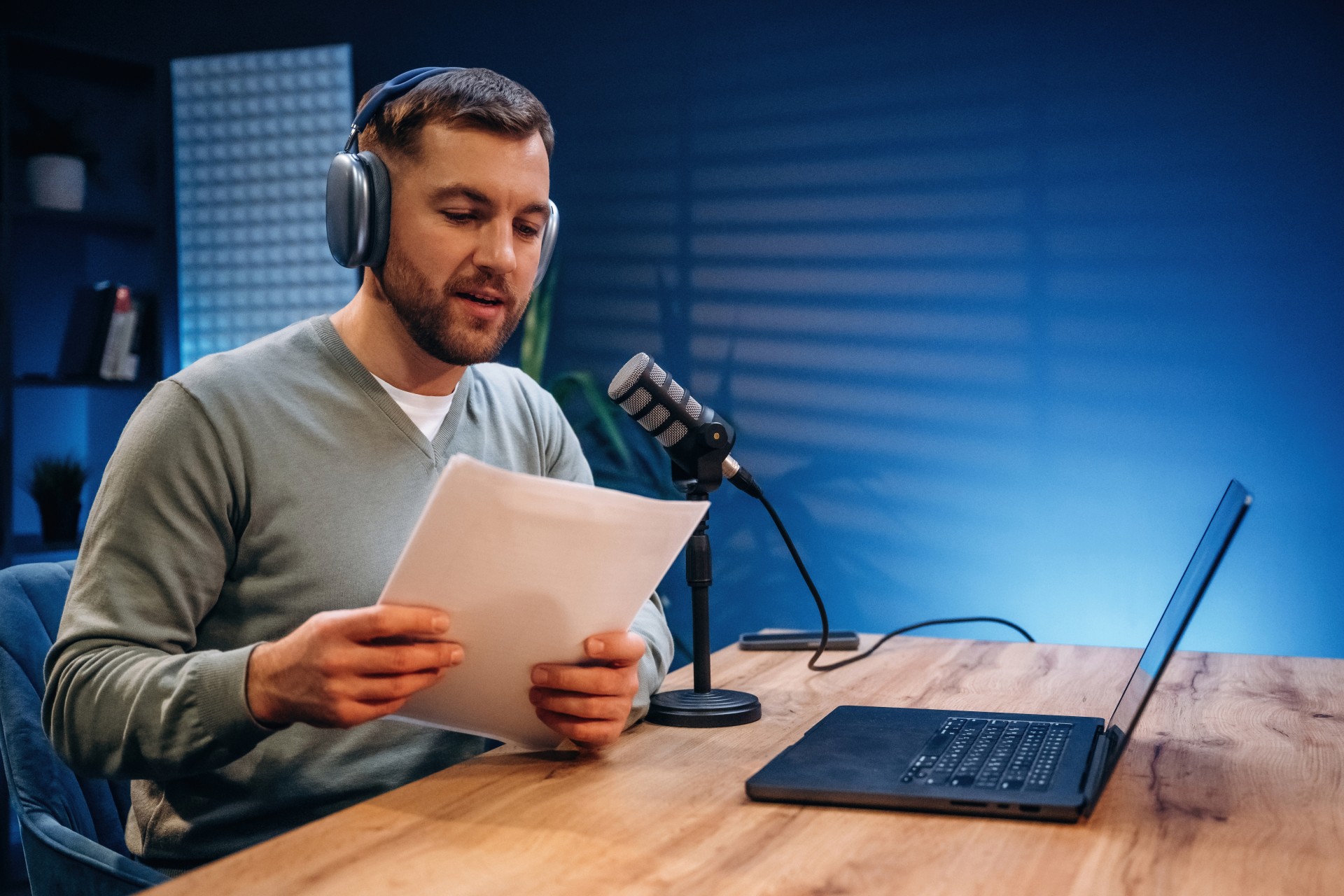
If you are recording a podcast episode every week and publishing it as a single audio or video file, you are leaving the majority of your content's value untouched. Every 60-minute podcast recording session contains a blog post, a LinkedIn article, five to eight short-form social clips, a newsletter, a set of quote cards, a YouTube description, chapter markers, and show notes. Most creators extract one of these and move on to the next episode.
The tool that unlocks all of it is the transcript.
In 2026, the transcript is no longer just a written record of what was said. It is the raw material for an entire content operation built from a single recording session. Creators who understand this are publishing across six platforms simultaneously from one episode. Creators who do not are spending four times the effort for a fraction of the output.
This blog is a practical guide to using podcast transcripts to multiply your content output, the tools that make it efficient, and why the quality of your recording session determines how well every downstream piece of content performs.
Why the Transcript Is the Most Underused Asset in Podcasting
The Problem With Treating a Podcast as a Single Piece of Content
When you publish a podcast episode as only an audio file or a video upload, you are asking your audience to come to you on your terms. They need to have 45 minutes or an hour available, in a context where listening or watching is possible, on the specific platform where your episode lives.
That is a high bar. Most people who would genuinely benefit from your content will never clear it, not because they are not interested, but because the format does not fit the moment they are in.
A LinkedIn post pulling a key insight from your episode reaches the professional scrolling between meetings. A Twitter thread breaking down your five main points reaches the person who never listens to podcasts but consumes written content obsessively. A 60-second Instagram Reel with captions reaches the audience that watches video but never subscribes to a feed. A blog post ranking in Google Search reaches people who do not even know your show exists yet.
All of these people are potential listeners. The transcript is what connects them to your content in the format and context that actually fits their lives.
What a Transcript Makes Possible
A clean, accurate transcript of a single podcast episode is the input for every content format listed above. It is also the foundation for your podcast's SEO strategy, your AEO visibility in AI search engines, your email newsletter, your repurposing workflow, and your long-term content library.
The creators in Mumbai who are growing their podcasts fastest in 2026 are not necessarily recording more. They are extracting more from every session they record, and the transcript is the engine of that extraction.
Step One: Getting a Clean, Accurate Transcript
Why Transcript Quality Starts in the Recording Room
Before discussing tools, there is a foundational point that most guides on podcast transcription skip past. The accuracy of an AI-generated transcript is directly proportional to the clarity of the audio it is processing.
A recording with significant background noise, reverb, overlapping speakers, or inconsistent microphone levels produces a transcript with errors, misattributions, and gaps that require extensive manual correction. That correction time erodes the efficiency advantage that AI transcription is supposed to provide.
A recording made in a professionally soundproofed studio with broadcast-quality microphones produces a transcript that is accurate enough to use as a working document with minimal editing. The difference in transcript quality between a home recording and a session recorded at a professional podcast studio in Mumbai like Fox Talkx Studio is significant enough to change how much time the entire downstream content workflow takes.
This is worth stating plainly: investing in a proper recording environment is not just an audio quality decision. It is a content production efficiency decision. Clean audio at source means clean transcripts, which means faster content output across every format you publish.
The Best AI Transcription Tools in 2026
Otter.ai
Otter.ai remains one of the most widely used transcription tools for podcast creators globally. It handles Indian English accents reliably, identifies multiple speakers with reasonable accuracy, and integrates with Zoom and Google Meet for live transcription during remote recording sessions. The output is clean enough for direct use as a working document for content repurposing.
Descript
Descript does transcription and significantly more. It generates a full transcript and then allows you to edit the audio and video of your episode by editing the text. Deleting a word from the transcript deletes the corresponding segment from the recording. For podcast editing, this is a workflow transformation. For content repurposing, the transcript it generates is directly usable as the source document for every piece of derivative content.
Whisper by OpenAI
Whisper is an open-source transcription model that handles multilingual content and mixed-language recordings with strong accuracy. For Indian podcasters producing content in Hindi, Hinglish, or regional languages, Whisper-based tools outperform most commercial alternatives. It is available through several third-party applications and directly through the OpenAI API for creators comfortable with a basic technical setup.
Riverside.fm
Riverside records podcast and video sessions in high quality and generates transcripts automatically. For remote recording sessions with guests in different cities, Riverside captures each speaker's audio locally and produces a clean multi-speaker transcript. It is particularly useful for interview-format podcasts where remote guest recording is part of the regular workflow.
Step Two: Turning One Transcript Into Multiple Content Formats
Once you have a clean transcript, the content multiplication begins. Here is a format-by-format breakdown of how to extract maximum value from a single episode transcript.
Blog Post and Long-Form Article
A well-structured podcast episode on a specific topic already contains the skeleton of a blog post. The introduction of the episode maps to the blog's opening section. The main discussion points become headings and subheadings. The conclusion of the conversation becomes the closing section.
The blog post is not a verbatim transcript published as text. It is a restructured, written version of the episode's core argument, expanded with context and formatted for a reader rather than a listener. A 45-minute episode typically yields a 1,500 to 2,500 word blog post that can rank independently in Google Search for the topics covered in the conversation.
This is one of the highest-leverage outputs from a transcript because it creates a permanent, searchable asset on your website that drives organic discovery long after the episode itself has moved down your feed. For podcast SEO in India, a consistent blog post paired with every episode is one of the most reliable long-term growth strategies available.
The podcast editing and production services at Fox Talkx Studio handle the audio and video side of your episode, freeing up your post-production time to focus on the written content strategy that turns each episode into a lasting search asset.
Show Notes and Episode Description
Show notes are the most immediate use of a transcript and the most consistently neglected. A strong show note page includes a summary of the episode, timestamps for key topics, links to resources mentioned, and a list of key takeaways. All of this information lives in the transcript. Pulling it out takes less than twenty minutes with a clear process.
Properly written show notes also serve your SEO strategy. A show notes page optimised with the keywords your target audience searches for is a web page that ranks in Google independently of your podcast's presence on Spotify or Apple Podcasts. For a creator building long-term discoverability, every episode's show notes page is a piece of real estate in search results.
LinkedIn Articles and Posts
LinkedIn rewards long-form written content from creators with professional audiences. A podcast episode covering a business, career, entrepreneurship, or industry topic contains multiple LinkedIn post ideas within a single transcript.
The workflow is straightforward. Read through the transcript and identify the three to five moments where the conversation produced a genuinely insightful, quotable, or counterintuitive point. Each of those moments is a LinkedIn post. Write each one in the first person, from your perspective as the host or guest, with enough context that it stands alone without requiring the listener to have heard the episode.
A single episode transcript typically yields one long-form LinkedIn article and three to five shorter posts that can be distributed across two to three weeks, keeping your professional network engaged between episode releases.
Twitter and Instagram Threads
The same insight extraction that produces LinkedIn posts produces Twitter threads and Instagram carousel content. The format changes but the source material is identical.
Twitter threads work well for breaking down a multi-step framework, process, or argument covered in the episode. Take the core logic of a 45-minute conversation and compress it into eight to twelve sequential points. Each point is one tweet. The thread drives traffic back to the full episode for listeners who want the complete context.
Instagram carousels follow a similar structure. A key framework from the episode, visualised across six to ten slides with clean typography and your brand colours, performs well with professional and creator audiences and is a shareable format that extends your reach beyond your existing followers.
Email Newsletter
An email newsletter built from a transcript is one of the most underused audience retention tools in Indian podcasting. Most creators who have an email list send infrequent, generic updates. The transcript gives you the content for a genuinely valuable weekly email: a summary of the episode's key insights, two or three direct quotes that landed well in the conversation, a link to the full episode, and a question to prompt replies and build engagement.
An email list built on genuinely useful content compounds in value over time. Unlike social media algorithms, you own the relationship. The transcript makes writing each issue fast enough to be sustainable week after week.
Short-Form Video Clips With Captions
This is where the visual quality of your recording environment compounds directly into your distribution reach. Short-form clips pulled from a video podcast episode are among the highest-performing organic content formats on Instagram Reels, YouTube Shorts, and LinkedIn Video in 2026.
The transcript tells you exactly where the best clip moments are. Identify moments in the transcript where a speaker made a sharp, standalone point in under 90 seconds. Those are your clips. An AI tool like OpusClip or Vizard.ai can take the timestamp and generate the clip automatically, add styled captions, and resize it for each platform.
The critical factor is visual quality. A clip from a session recorded at a professional video podcast studio in Mumbai looks like a media production. It stops the scroll. A clip from a webcam recording looks like a video call. It does not. The same insight, delivered with the same energy, performs differently based entirely on the production quality of the source recording.
Quote Cards and Visual Assets
Quote cards are one of the simplest and most consistent social content formats for podcasters. Pull five to eight strong quotes directly from the transcript, set them in a clean typographic design with your brand colours and the speaker's name, and you have a week of Instagram and LinkedIn content from a single reading of the transcript.
Quote cards work because they are easily shareable, immediately readable without audio, and attributable in a way that often prompts the quoted guest to share them with their own audience, extending your reach to their network organically.
Step Three: Building a Repeatable Transcript-to-Content Workflow
The Workflow That Compounds Over Time
The value of transcript-based content multiplication is not in any single episode's output. It is in the compounding effect of running the same workflow consistently across every episode you publish.
A creator who extracts a blog post, a LinkedIn article, five social clips, a newsletter, and a set of quote cards from every episode is building a content library that grows in search visibility, social reach, and audience size with every episode added. At 50 episodes, that library contains 50 blog posts indexing in Google, 250 or more social clips distributed across platforms, and 50 newsletter issues that have been building an email relationship with subscribers over time.
That compound asset is what separates podcasts that grow from podcasts that plateau, and the transcript is the raw material that makes it possible.
A Simple Weekly Workflow for Mumbai Creators
Here is a practical workflow that keeps the process manageable without requiring a full production team.
Day of recording: Record your episode at a professional studio. Fox Talkx Studio's podcast editing services in Mumbai handle the audio and video post-production, which means your edited episode is ready without consuming your own time.
Day after recording: Upload the raw or edited audio to your transcription tool of choice. Otter.ai or Descript both return accurate transcripts within minutes. Read through the transcript once and highlight the five strongest moments: the sharpest insight, the most counterintuitive point, the most relatable story, the most actionable advice, and the most quotable line.
Two days after recording: Use the transcript and your highlights to generate your blog post draft, LinkedIn article, and newsletter using an AI writing tool like ChatGPT or Claude. Each of these takes 20 to 30 minutes with a clear transcript as input, not the two to three hours it takes to write from scratch.
Three days after recording: Create your short-form clips using OpusClip or Vizard.ai using the timestamps from your highlighted moments. Generate your quote cards from the quotable lines. Schedule all social content across platforms for the following week using a scheduling tool like Buffer or Later.
Publishing day: Your episode goes live with show notes, a paired blog post on your website, a newsletter to your list, and a week of social content already scheduled and ready to distribute.
The total time investment after the recording session, excluding the AI-generated drafts that require minimal editing, is three to four hours. For a creator publishing weekly, that is a sustainable content operation that produces output across six channels from a single hour of conversation.
Why the Recording Environment Determines the Ceiling of Your Content Operation
Everything in this workflow depends on the quality of the source recording. A clean transcript, a sharp short-form clip, an accurately captioned video, a blog post that captures the nuance of the conversation, and a newsletter that reflects the energy of the episode all trace back to what was captured in the recording room.
Poor audio produces inaccurate transcripts. Inaccurate transcripts require manual correction that erodes the time savings AI tools provide. Poor video quality produces clips that do not stop the scroll regardless of how good the insight is. A flat, disconnected on-camera presence does not yield the kind of 60-second moment that makes a viewer want to hear the full episode.
The recording environment is not a separate decision from your content strategy. It is the foundation of it.
Fox Talkx Studio's podcast recording and editing services in Mumbai are built around exactly this principle. The soundproofed recording rooms, Rode Wireless Go II professional audio, 4K multi-camera setup, broadcast-quality lighting, and full editing services ensure that every session produces source material that the entire downstream content workflow can build on reliably.
Recording near Yashraj Studio in Mumbai, Fox Talkx Studio is accessible for creators, guests, and brand teams from across the western suburbs and central Mumbai. The all-in-one setup means you walk in with your topic and your guest and walk out with the raw material for three to four weeks of content across every platform your audience uses.
The Bottom Line
A single podcast episode is not one piece of content. It is a content library waiting to be unlocked. The transcript is the key.
Creators who build a consistent transcript-to-content workflow are not working harder than the ones who are not. They are working smarter with the same recording sessions, the same conversations, and the same hours. The difference is that their content reaches more people, in more formats, across more platforms, and builds a compounding asset of searchable, shareable content that grows in value with every episode they add.
The workflow starts with a great recording. It scales with a consistent process. And it compounds over time into the kind of content presence that established shows have built over years, available to new creators who are willing to be systematic from episode one.
Book your podcast recording session at Fox Talkx Studio and start treating every conversation you record as the content operation it has always had the potential to be.