
How to Use the Rule of Thirds in Video Editing
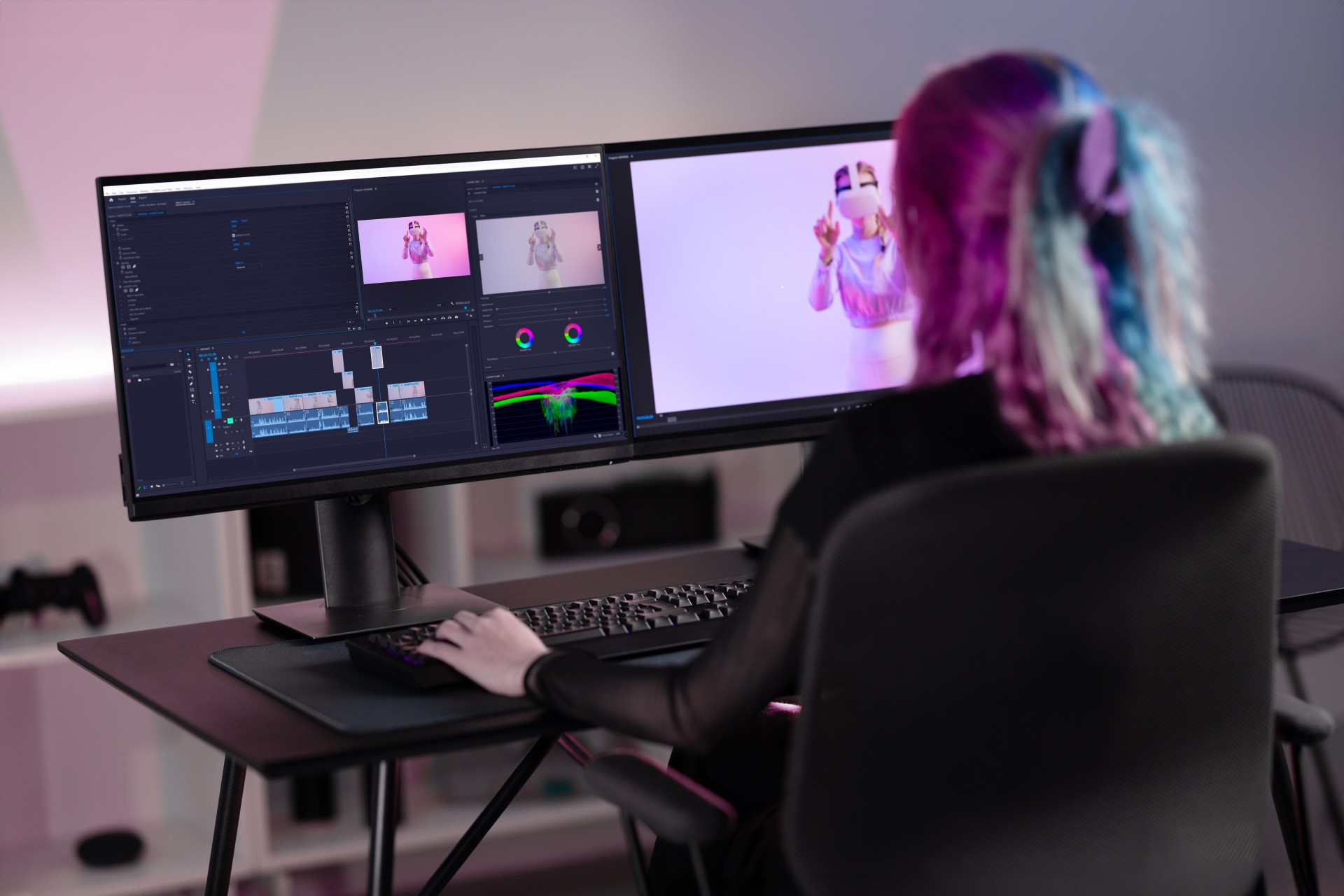
Of all the visual principles that govern how images are composed, the rule of thirds is the most consistently useful, the most widely applicable, and the most immediately impactful on the perceived quality of video content. It is taught in every photography class, discussed in every cinematography curriculum, and applied in virtually every piece of professionally produced visual content that holds an audience's attention.
It is also one of the most consistently ignored principles in podcast video production, where the default approach to camera placement tends to be centered framing, positioning the speaker directly in the center of the frame without consideration of what the compositional alternative would look like or how it would affect the viewer's experience of the content.
This post examines what the rule of thirds is, why it works psychologically and aesthetically, how to apply it in podcast video recording and editing, and how compositional thinking more broadly transforms the visual quality of podcast content from technically recorded to genuinely watchable.
What the Rule of Thirds Actually Is
The rule of thirds is a compositional guideline that divides the frame into nine equal sections by placing two equally spaced horizontal lines and two equally spaced vertical lines across the image. The four points where these lines intersect are called power points or crash points, and the lines themselves are called the thirds lines.
The rule states that the most visually compelling compositions place the most important elements of the image at or near these intersection points or along the thirds lines, rather than in the center of the frame. A subject placed at one of the four intersection points is typically more visually engaging than the same subject placed in the center of the frame, and the reasons for this are both psychological and aesthetic.
Most professional editing applications and camera systems can display a thirds grid overlay on the image for reference during composition and editing, making the practical application of the rule straightforward once its principles are understood.
Why the Rule of Thirds Works: The Psychology Behind the Principle
Understanding why the rule of thirds produces more engaging compositions than centered framing helps editors and creators apply it with genuine understanding rather than mechanical rule-following.
The Psychology of Visual Weight and Balance
The human visual system does not experience all areas of an image as equally important. Certain areas carry more visual weight, attracting attention more readily and holding it longer. The center of the frame carries significant visual weight, but it also creates a static, symmetrical balance that the brain processes quickly and then departs from. There is no visual tension, no sense of movement or dynamism, in a perfectly centered composition.
Placing a subject at or near the intersection points of the thirds grid creates a composition with a different kind of balance: an asymmetrical balance that creates visual tension and movement. The viewer's eye is drawn to the subject by its visual weight, but the surrounding space in the frame, the negative space created by the off-center placement, creates a sense of depth, context, and visual dynamism that centered compositions cannot produce.
This visual tension is not uncomfortable. It is the quality that makes an image feel alive rather than static, and it is one of the primary reasons that images composed according to the rule of thirds tend to hold the viewer's attention longer than centered images.
The Role of Negative Space in Creating Context
The negative space created by off-center composition carries specific information about the context and direction of the subject. A speaker placed in the left third of the frame with space to their right is communicating to the viewer that the speaker is oriented toward something, looking toward or speaking into a space that the frame has provided for that purpose.
This negative space creates a felt sense of the speaker's engagement with the world beyond the frame, which in a conversation format accurately reflects the reality of the podcast recording: the speaker is talking to someone, and the negative space gestures toward that someone even when they are not visible in the frame.
Centered compositions eliminate this contextual dimension. A speaker centered in the frame is speaking into a void that is equally distributed on both sides, creating a frontal, address-the-camera quality that feels more like a news anchor presentation than a genuine conversation.
Applying the Rule of Thirds in Podcast Video Recording
The rule of thirds can be applied at two stages in podcast video production: during the recording session, when camera placement and subject positioning can be planned deliberately, and during editing, when existing footage can be reframed or composed in post-production.
Camera Placement and Subject Positioning in the Studio
The most fundamental application of the rule of thirds in podcast video is the positioning of speakers within the frame during the recording session. In a standard two-person podcast interview setup, the most visually compelling arrangement positions each speaker in one of the two vertical thirds of the frame, with each speaker oriented toward the center of the frame where their conversation partner is located.
In practice, this means that the host, when shown on their dedicated camera, appears in either the left or right third of the frame with their eyeline directed toward the opposite side of the frame where the guest is seated. The guest, on their dedicated camera, appears in the mirror-image position, in the opposite third with their eyeline directed back toward the host's position.
This arrangement creates two compositionally strong individual shots that also convey the spatial and relational context of the conversation: each speaker is positioned as though oriented toward someone, and the negative space in each frame gestures toward the partner in the conversation.
Setting up this compositional arrangement requires adjusting the camera position and the angle of the subject relative to the camera, not just the subject's distance from the camera. A subject who is centered in the frame will remain centered regardless of how close or far the camera is placed. Achieving a thirds composition requires the subject to be positioned off-center within the frame, which requires either a camera placed to one side of the subject or a subject positioned away from the direct axis of the camera.
For podcast creators in Mumbai who record at a professional studio where camera placement can be planned and adjusted for compositional quality, Fox Talkx Studio provides the recording environment where these compositional principles are built into the studio setup. Explore the full range of professional podcast recording and editing services at https://www.foxtalkxstudio.com/services/podcast-editing-in-mumbai.
Eyeline Placement Along the Horizontal Thirds
In addition to the horizontal positioning of the subject within the frame, the rule of thirds applies to the vertical placement of key facial features. The most compelling portrait and talking-head compositions typically place the subject's eyes along the upper horizontal thirds line rather than in the center of the frame.
When the eyes are placed at the upper third, the face occupies the compositionally strongest area of the frame and the viewer's attention is naturally drawn to the eyes, which are the primary focus of human attention in face-to-face interaction. The space below the face in the frame, which might include the subject's shoulders, hands, or the studio environment, provides visual context that grounds the subject in a physical reality.
When the eyes are centered in the frame, the face appears to float without the visual grounding that the lower space provides, and the composition feels less natural than one where the eyes occupy the upper third position.
Using the Thirds Grid in Camera Setup
Most cameras, including the mirrorless cameras and dedicated video cameras commonly used in podcast recording, include a grid overlay option that displays the thirds grid lines on the camera's live view screen or viewfinder. Enabling this grid during camera setup makes the practical application of the rule of thirds in framing decisions straightforward: the intersection points are visible in the viewfinder, and the subject can be positioned relative to them directly.
The time investment in proper compositional framing at the setup stage is minimal and produces immediate and significant improvements in the visual quality of the recorded footage that benefit every subsequent stage of post-production.
Applying the Rule of Thirds in Post-Production Editing
When footage has been recorded with centered or otherwise compositionally suboptimal framing, post-production editing offers tools for improving the composition of individual shots through cropping, reframing, and zooming.
Cropping and Reframing in the Edit
The crop tool in video editing applications allows the editor to change the visible area of a clip by removing portions of the frame. By cropping a centered composition, the editor can create a thirds-based reframe that repositions the subject from the center of the frame to a thirds intersection point.
This crop-based reframe comes with an important technical constraint: any crop of the original footage reduces the effective resolution of the resulting image by the proportion of the frame that has been removed. A significant crop that removes a third of the frame from one side reduces the effective resolution of the image by approximately a third, which may produce a softer, lower-quality image when the cropped footage is played at full output resolution.
For this reason, crop-based reframing in post-production is most effective when applied to footage recorded at a resolution higher than the output resolution. Footage recorded at 4K and output at 1080p has significant resolution headroom that allows substantial cropping without visible quality degradation. Footage recorded at 1080p and output at 1080p has no resolution headroom, and even modest cropping will produce a visibly softer output image.
Using Animated Reframes for Dynamic Composition
In addition to static crops that maintain a consistent reframe throughout a clip, animated reframes that gradually move between different compositional positions within a clip can add visual dynamism to footage that would otherwise be entirely static.
A slow, subtle animated move from a centered wide composition to a tighter thirds-based composition during the opening of an episode creates a gentle sense of visual arrival that the static wide shot cannot deliver. A gradual animated zoom that slowly tightens on a speaker's face during a moment of emotional significance creates a felt sense of visual emphasis that supports the emotional weight of the spoken content.
These animated reframes should be subtle: slow in speed and modest in scale, creating a felt sense of visual movement rather than an obviously animated camera move. The movement should serve the content, creating visual emphasis at appropriate moments rather than providing constant motion for its own sake.
The Ken Burns effect, the specific type of animated pan and zoom that gradually moves across a static image or video frame, is the standard implementation of this animated reframe technique in video editing applications. Most professional editing applications include a Ken Burns tool or an equivalent animated crop feature that allows these movements to be created without requiring keyframe animation skills.
Checking Composition During the Color Grade
Color grading provides an opportunity to review the composition of each clip with fresh attention, assessing whether the framing serves the content and whether any reframe adjustments would improve the shot before the grade is locked.
Professional colorists often make subtle crop and reframe adjustments as part of the color grading stage, using the resolution headroom of high-resolution footage to optimize composition alongside the color treatment. This integrated approach to composition and color in the grade produces a visually polished result that addresses both dimensions of image quality in a single pass.
Beyond the Rule of Thirds: Additional Composition Principles for Podcast Video
The rule of thirds is the most important and most universally applicable composition principle for podcast video, but it is part of a broader set of compositional principles that professional video editors and directors of photography use to create visually compelling images.
Leading Lines
Leading lines are visual elements within the frame that direct the viewer's eye toward the primary subject. In studio podcast video production, leading lines might be created by the lines of furniture, the edges of acoustic panels, or architectural elements of the studio environment that converge toward or point toward the speaker.
When the studio environment is designed with compositional awareness, leading lines can be built into the physical space in ways that naturally create compositionally strong images regardless of the camera angle. When the studio environment does not offer natural leading lines, careful camera placement can use existing architectural or furniture lines to create a compositional structure that supports the subject.
Depth and Layering
Images that have visual depth, where elements are visible at different distances from the camera, feel more three-dimensional and more immersive than flat images where all elements are at the same apparent distance. In podcast video production, depth can be created by ensuring that elements of the studio environment are visible in the background at a different focal distance from the speaker, creating a layered image rather than a flat one.
Background depth is most visually effective when the background elements are in soft focus relative to the sharp focus on the speaker. This shallow depth of field effect, which separates the subject sharply from a softly blurred background, is one of the visual qualities most associated with professional video production and is achieved through a combination of large aperture lens settings and an appropriate distance between the subject and the background.
Symmetry and Deliberate Centered Composition
The rule of thirds is a guideline rather than an absolute rule, and there are specific contexts in which deliberately centered composition creates a stronger visual effect than thirds-based composition. Formal, authoritative, and ceremonial contexts often benefit from the symmetry and solemnity of centered composition, where the frontal, symmetric framing conveys stability and authority rather than dynamism.
For podcast video content that operates in a formal, authoritative register, a precisely centered composition may be more appropriate than a thirds-based one. The key is that the decision should be deliberate: a choice made based on the compositional qualities of centered framing serve the specific content, not a default that occurs because no compositional decision has been made.
For podcast creators and production teams in Mumbai who want compositional quality built into every stage of their production process, from studio setup through post-production editing, Fox Talkx Studio provides the professional environment and editorial expertise that makes consistent compositional excellence achievable. Visit https://www.foxtalkxstudio.com/services/podcast-editing-in-mumbai to discover what professional podcast video production looks like when composition is treated as a primary quality consideration.
Practical Exercises for Developing Compositional Skill
Understanding the rule of thirds and related composition principles is the first step. Developing the intuitive compositional sensitivity that allows these principles to be applied quickly and correctly in production situations requires deliberate practice.
Analyzing Existing Content for Compositional Quality
The fastest way to develop compositional intuition is to analyze existing high-quality video content specifically for its compositional decisions. Watch any professionally produced podcast video or documentary with the thirds grid in mind, identifying where the subjects are positioned relative to the grid lines and intersection points, and asking why specific compositional choices were made.
This analytical viewing practice builds a visual vocabulary of compositional examples that can be referenced and applied in your own production work. Over time, the examples accumulate into an intuitive sense of what good composition feels like that operates faster than conscious analysis.
Photographing Still Images With the Rule of Thirds
Still photography is an excellent practice medium for compositional skill development because the slower pace of still image composition allows more deliberate attention to the placement of elements within the frame than the real-time demands of video production typically permit.
Practicing compositional decisions in still photography, using a phone camera with the thirds grid enabled, builds the visual awareness that transfers directly to video composition decisions. The principles that make a still photograph compositionally strong are the same principles that make a video frame compositionally strong, and developing comfort with these principles in the more forgiving medium of still photography accelerates their application in video.
Reviewing Your Own Footage With Compositional Eyes
After each recording session, reviewing the footage specifically for compositional quality, asking whether each shot is framed as compellingly as it could be and what specific adjustments would improve it, builds the self-assessment habit that is the foundation of continuous compositional improvement.
This compositional review is most effective when it is conducted separately from the content review: a dedicated pass through the footage focused specifically on how the images look rather than on what the subjects are saying. Separating these two assessments allows each to be conducted with full attention, producing more thorough and more actionable feedback on both dimensions.
Key Takeaways
The rule of thirds is the most important compositional principle available to podcast video creators and editors, and its consistent application produces a measurable improvement in the visual quality and viewer engagement of every episode it is applied to.
The principle works because off-center composition creates visual tension and dynamism that centered composition cannot achieve, because negative space conveys contextual information that grounds the subject in a conversational reality, and because placing key facial features at thirds positions creates a natural visual hierarchy that aligns with how human attention operates.
It can be applied during recording through deliberate camera placement and subject positioning, and during editing through crop-based reframing and animated compositional moves. It is part of a broader set of compositional principles that includes leading lines, depth and layering, and the deliberate use of symmetry in appropriate contexts.
Developing compositional intuition requires deliberate practice through analytical viewing of existing content, still photography practice, and the self-assessment habit of reviewing your own footage with compositional eyes.
For podcast creators in Mumbai who want compositional quality consistently applied across every shot in every episode as part of a professional post-production service, Fox Talkx Studio provides the visual expertise and editorial precision that transforms technically recorded footage into visually compelling content. Visit https://www.foxtalkxstudio.com/services/podcast-editing-in-mumbai to explore what professional podcast video editing looks like when composition is treated as a primary quality standard from recording through final export.