
Why Your Podcast Studio Setup Matters in 2026: Guide
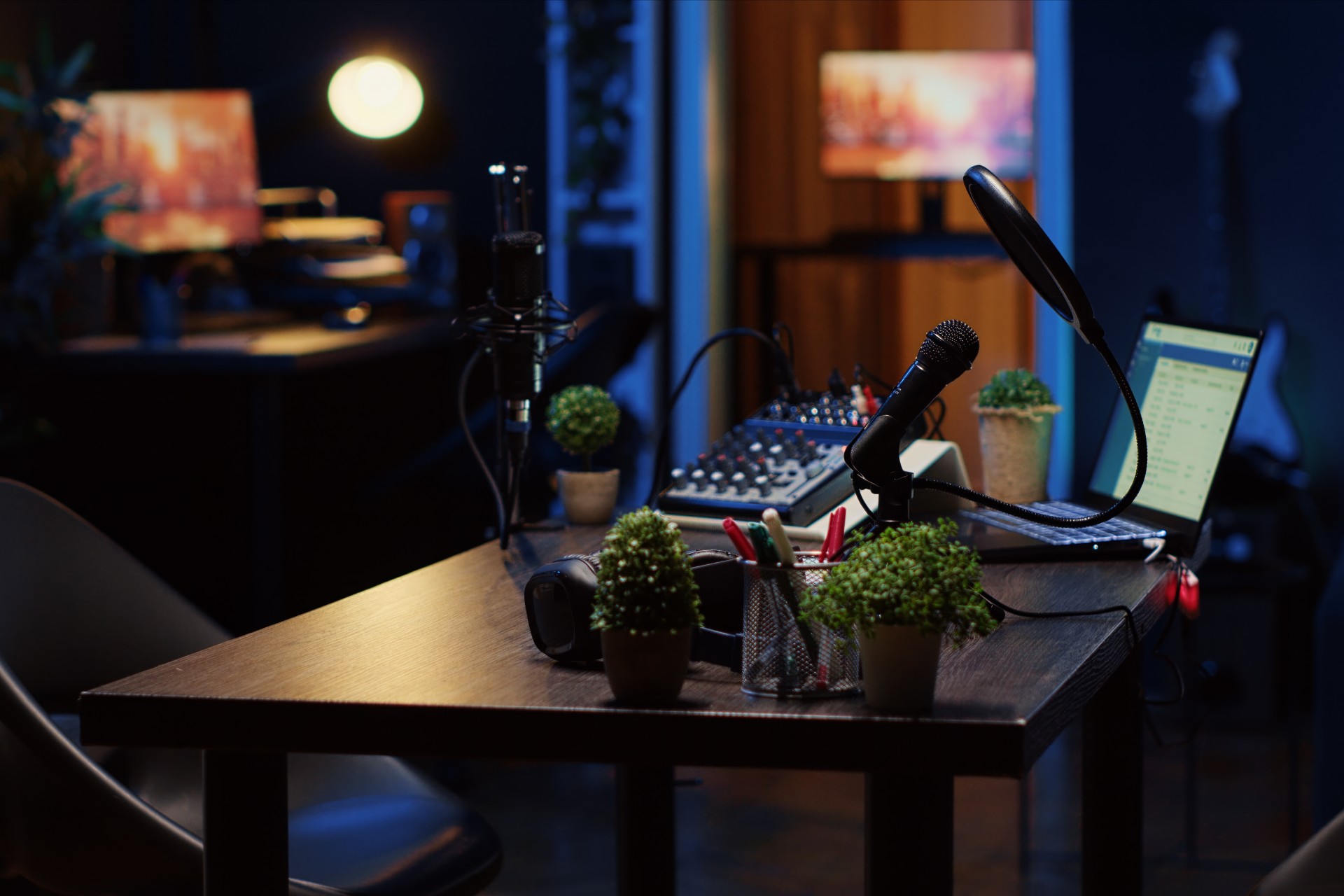
There has never been a better time to start a podcast. There has also never been a more demanding time to produce one. The podcasting landscape in 2026 is populated by millions of shows, but a significant and growing proportion of them are produced at a level of technical and creative quality that has raised the expectations of listeners across every niche, format, and language category.
In this environment, your podcast studio setup is not a background detail. It is a front-line factor in whether your show retains listeners, attracts quality guests, earns subscriber loyalty, and builds the kind of reputation that opens commercial doors. The decisions you make about where and how you record your podcast, what equipment captures your voice, how your space is acoustically treated, and how your raw audio is processed and delivered, directly shape every listener's experience of your show.
This is not about perfectionism or unnecessary expenditure. It is about understanding what your setup communicates to listeners and what it makes possible in terms of content quality, production efficiency, and long-term show growth. In 2026, your studio setup is your competitive infrastructure, and the shows that invest in getting it right are the ones that are growing.
The Listener Has Changed and Your Setup Needs to Reflect That
The podcast listener of 2026 is not the same as the podcast listener of 2019. Years of exposure to professionally produced content across audio, video, and streaming platforms have educated the average listener's ear in ways that have permanent implications for what they will tolerate from a show they encounter for the first time.
What Modern Listeners Expect From Podcast Audio
Modern podcast listeners have internalized a set of audio quality expectations that they may not be able to articulate technically but will act on immediately if those expectations are not met. Within the first thirty seconds of an episode, a listener is making a judgment about the show based almost entirely on how it sounds. Poor audio quality, the kind produced by inadequate microphones in acoustically untreated spaces, communicates a lack of investment that listeners interpret as a lack of care about their experience.
This judgment happens below the level of conscious analysis. The listener does not think "this show has a poor signal-to-noise ratio and inconsistent dynamic range." They simply feel that the show does not deserve their sustained attention, and they move on. By the time the content has had a chance to win them over, they are already gone.
The flip side of this dynamic is equally important. A listener who encounters clean, warm, professionally produced audio within the first seconds of an episode immediately relaxes. The audio quality signals that the show is trustworthy, that someone has invested in delivering a good experience, and that the content is likely to be worth the listener's time. This first impression, created entirely by the technical quality of the recording, sets the relational foundation for everything that follows.
The Competition Has Raised the Bar
The production quality of the average podcast has risen significantly over the past several years, driven by the professionalization of the medium and the wider availability of professional studio services. The shows that new listeners are comparing yours to are often produced in professional studios with broadcast-grade equipment and post-production support.
In this competitive context, a home recording setup that might have been adequate five years ago is now a liability. It is not that home recording is inherently impossible to do well. It is that achieving the acoustic quality and production consistency that the current market expects from a home setup requires a level of investment and technical expertise that most podcasters do not have or want to develop.
For podcasters in Mumbai who want their show to compete at the level the current market demands, Fox Talkx Studio provides professional podcast editing and production services designed to deliver broadcast-quality audio from every episode. Explore what professional production support looks like for your show at https://www.foxtalkxstudio.com/services/.
The Components of a Studio Setup That Actually Matter
Understanding why your studio setup matters is the first step. Understanding specifically which components of that setup have the greatest impact on the quality and consistency of your output is what allows you to make informed decisions about where to invest and where to partner with professionals.
Acoustic Environment: The Foundation Everything Else Depends On
The acoustic environment of your recording space is the single most important component of your studio setup, and it is the one that receives the least attention from podcasters who approach their setup as a hardware problem rather than a space problem.
No microphone, however expensive, can compensate for a poor acoustic environment. When a voice is recorded in an untreated space, the microphone captures not just the voice but the sound of the room: the reflections bouncing off hard walls and ceilings, the low-frequency resonances created by the room's dimensions, and the ambient noise from ventilation, traffic, and neighboring spaces. All of this acoustic information is baked into the recording at the point of capture, and while some of it can be reduced in post-production, it cannot be fully eliminated.
A properly treated recording space uses acoustic absorption and diffusion materials to minimize these problems at source. The result is a recording that captures the voice cleanly and naturally, with no unwanted room sound contaminating the signal. This clean capture is the foundation on which all subsequent production work is built. Get it right and every subsequent stage of production is working with excellent raw material. Get it wrong and every subsequent stage is a damage limitation exercise.
Microphone Quality and the Voice It Captures
The microphone is where the acoustic energy of the voice is converted into the electrical signal that becomes the audio recording. The quality of this conversion has a profound effect on the character of the recorded voice and, by extension, on the listener's experience of the show.
Professional podcast microphones, whether condenser or dynamic types, are designed to capture the full frequency range and natural character of the human voice with accuracy and warmth. They reproduce the subtle nuances of vocal performance, the variations in tone, the emotional coloring of different registers, the natural resonance of different voices, in ways that consumer-grade microphones cannot reliably achieve.
The difference in perceived voice quality between a professionally recorded voice and one captured on a consumer microphone is immediately audible to most listeners, even if they cannot identify its technical source. Professional microphones make voices sound present, warm, and authoritative. Consumer microphones make voices sound thin, harsh, or distant. For a medium that lives and dies by the quality of human voice communication, this difference is not minor.
Audio Interface and Signal Chain Integrity
Between the microphone and the digital recording is the signal chain: the preamplifier that boosts the microphone's output signal, the analog-to-digital converter that transforms it into digital audio, and the digital audio workstation software that captures and stores it. Each link in this chain contributes to the final quality of the recording, and weaknesses at any point compromise the integrity of the audio even if the microphone and acoustic environment are excellent.
Professional audio interfaces and preamplifiers maintain the integrity of the signal through this chain with a low noise floor and accurate conversion that consumer-grade equipment cannot consistently achieve. The difference is particularly audible in the detail and naturalness of the recorded voice and in the absence of the subtle noise artifacts that consumer equipment introduces.
Monitoring: Hearing What You Are Actually Recording
An often overlooked component of the studio setup is monitoring: the headphones or speakers through which you assess the audio as it is being recorded and during the editing process. Accurate monitoring is essential for identifying problems in the recording before they become embedded in the final episode.
Consumer headphones and speakers are designed to make music sound enjoyable rather than accurate. They typically boost certain frequency ranges and compress the dynamic range of the audio in ways that make it sound more pleasant but that obscure the technical problems a producer needs to identify. Professional studio monitors and reference headphones are designed for accuracy, revealing the audio as it actually is rather than as the equipment has processed it to sound.
Without accurate monitoring, problems in the recording, background noise, inconsistent levels, acoustic artifacts, can go undetected until the episode is published, at which point they are heard by every listener.
Why Your Post-Production Setup Is as Important as Your Recording Setup
A common misconception among new podcasters is that a great recording setup reduces the importance of post-production. In reality, the two are equally critical to the final quality of the episode, and neither can fully compensate for deficiencies in the other.
What Professional Podcast Editing Delivers
Professional podcast editing is the process that transforms a raw recording into a finished episode. The scope of this process goes well beyond the basic cutting and cleaning tasks that most people associate with podcast editing.
A professional editor approaches the raw recording as editorial material, not just audio to be cleaned up. They assess the structural flow of the conversation, identifying where it accelerates effectively and where it loses momentum. They remove content that does not serve the episode's purpose, whether that is extended tangents, repeated points, or sections where the energy drops without recovery. They manage the pacing of the episode to maintain listener engagement across its full running time. And they integrate all episode elements, intro music, ad reads, chapter markers, and outro, seamlessly and purposefully.
This editorial work is distinct from the technical audio processing that also happens in post-production. Both dimensions of the editing process contribute to the listener's experience, and both require specific expertise to execute well. A technically clean episode that is poorly structured and paced will lose listeners. A well-structured episode with poor audio processing will also lose listeners. Professional editing addresses both dimensions simultaneously.
Audio Processing: Making the Voice Sound Its Best
The technical audio processing applied in post-production is what ensures that the recorded voice sounds its best across all the different playback environments in which podcast listeners encounter it. A podcast episode might be listened to through high-end studio headphones, a car stereo, a phone speaker in a noisy gym, or a smart speaker in a kitchen. The audio processing needs to ensure that the voice is clear, natural, and intelligible in all of these contexts.
This processing involves equalization to balance the tonal character of each voice, compression to manage dynamic range and ensure consistent perceived volume, noise reduction to minimize any remaining background noise or room sound, de-essing to reduce harsh sibilant frequencies, and limiting to ensure the final audio meets the loudness standards required by podcast distribution platforms.
Each of these processes requires technical knowledge, appropriate software tools, and calibrated monitoring to execute accurately. When done well, they are transparent: the listener experiences a natural, comfortable sound without being aware of any processing. When done poorly, they are immediately obvious: voices sound unnatural, levels are inconsistent, and the listening experience is compromised.
For podcasters who want their episodes delivered platform-ready with professional audio quality and fast turnaround, Fox Talkx Studio offers dedicated podcast editing services in Mumbai built around exactly these standards. Every episode is edited, processed, and delivered ready for distribution. Find out more at https://www.foxtalkxstudio.com/services/podcast-editing-in-mumbai.
The Business Case for Investing in Your Studio Setup in 2026
Beyond the technical and creative dimensions of studio setup quality, there is a straightforward business case for investing in professional recording and production standards in 2026. The returns on this investment manifest across multiple dimensions of show performance and business growth.
Listener Retention and Subscriber Growth
The most direct business return on studio setup investment is listener retention. A show that sounds professional retains the listeners it attracts for significantly longer than a show with poor audio quality, regardless of content quality. Retained listeners become subscribers. Subscribers become community members. Community members become advocates who generate organic word-of-mouth growth that no advertising budget can replicate.
The compounding effect of this retention advantage over the course of a year or two of consistent publishing is substantial. A show that retains eighty percent of new listeners through professional audio quality will have a significantly larger and more loyal audience after twelve months than a show with equivalent content that retains sixty percent because of audio quality issues. The investment in professional production is, in this sense, an investment in the compound growth rate of the show's audience.
Guest Quality and Episode Prestige
The quality of guests a podcast can attract is directly related to the perceived professionalism of the show. High-value guests, those with established reputations, large audiences, or significant industry authority, are selective about the platforms they appear on. A show that signals professional production standards through the quality of its existing episodes is a significantly more attractive proposition for a quality guest than one that signals amateurism through poor audio.
This guest quality dynamic creates a virtuous cycle. Professional production quality attracts better guests. Better guests produce better episodes. Better episodes attract more listeners and more quality guests. The initial investment in professional studio setup is what starts this cycle.
Sponsorship and Commercial Credibility
For podcasters who have monetization as a goal, professional production quality is not optional. Sponsors associate their brand with the shows they appear on, and they make quality judgments accordingly. A show with professional audio quality signals to potential sponsors that it is a serious, reliable operation that will represent their brand well. A show with poor production quality signals the opposite, regardless of the audience size.
The bar for attracting sponsorship interest has risen in line with overall production quality standards. In 2026, professional audio is a baseline requirement for commercial conversations rather than a differentiator. Shows that meet this baseline can have sponsorship conversations. Shows that do not, cannot.
Home Setup vs Professional Studio: Making the Right Choice for Your Show
The question of whether to invest in a home setup or record in a professional studio is one that every podcaster faces at some point, and the right answer depends on a combination of factors including budget, production volume, show format, and growth ambitions.
The Real Cost of the Home Setup
The home setup appears cost-effective on the surface, but its true cost is frequently underestimated. The capital cost of purchasing equipment that genuinely meets professional standards is significant. The ongoing cost of the time required to manage the technical aspects of recording and production independently is substantial. And the opportunity cost of the hours spent troubleshooting problems, re-recording compromised material, and learning audio engineering skills that are tangential to the actual goals of the show is a real business expense that rarely appears in the home studio cost calculation.
When all of these costs are properly accounted for, the apparent cost advantage of the home setup frequently disappears, particularly for shows that are publishing consistently and growing toward commercial goals.
The Professional Studio as Efficient Production Infrastructure
The professional studio offers a fundamentally different production model in which the capital investment in equipment, the maintenance of acoustic standards, and the technical management of the recording process are all handled by specialists. The podcaster arrives, records, and leaves with a raw file that is ready for professional post-production. The efficiency of this model, both in terms of time and in terms of the quality ceiling it enables, makes it the more cost-effective choice for many serious podcasters once the full cost comparison is honestly made.
For shows with consistent publishing schedules and growth ambitions, the professional studio is not a luxury. It is the most efficient path to the production standard that the 2026 podcast market demands.
Fox Talkx Studio provides professional podcast recording and editing services in Mumbai specifically designed for creators and businesses who want their show to sound exceptional without the overhead of managing a home studio. From raw recording to polished, platform-ready episode delivery, the team handles every stage of the production process at the standard that modern listeners expect. Discover the full service offering at https://www.foxtalkxstudio.com/services/.
The Setup Behind the Video Podcast
For podcasters who are also producing video content alongside their audio episodes, the studio setup requirements expand significantly. Video podcasting demands professional lighting that eliminates unflattering shadows and creates a visually clean, well-defined image. It requires camera placement and configuration that captures the conversation from multiple angles with the visual quality that video platform audiences expect. And it requires a studio background and visual environment that communicates the show's brand identity positively and consistently.
The integration of video production into the podcast studio setup is one of the defining infrastructure developments of 2026 podcasting. Shows that have made this transition successfully are reaching audiences across both audio and video platforms from a single recording session, effectively doubling the content output of each studio day without proportionally increasing the production effort.
Getting the video setup right requires the same combination of purpose-built environment, professional equipment, and technical expertise that audio podcasting demands, just extended into the visual domain. Professional studios that have invested in integrated audio-video production capabilities are the most efficient partners for podcasters making this transition.
Key Takeaways
Your podcast studio setup in 2026 is your show's competitive foundation. The acoustic environment you record in, the equipment that captures your voice, the post-production process that shapes your raw recording into a finished episode, and the visual production quality of your video content all directly determine the listener experience you are able to deliver and the growth trajectory your show is able to achieve.
The standards the current market expects are higher than they have ever been. Meeting those standards requires either a significant investment in a home setup capable of professional-quality output or a partnership with a professional studio that provides that infrastructure without the overhead of ownership and management.
For podcasters in Mumbai who are serious about building shows that compete at the level the 2026 market demands, Fox Talkx Studio offers the professional recording environment, expert editing team, and fast turnaround delivery that gives every episode the quality it deserves. Whether you are launching your first show or elevating an established one, the production support at Fox Talkx Studio is built to meet the demands of the current podcast landscape.
Take the next step toward a show that sounds as good as it deserves to. Explore professional podcast editing services in Mumbai at https://www.foxtalkxstudio.com/services/ and find out what professional production can do for your show's growth.