
Essential Equipment for a Podcast Studio Setup: The Complete Guide
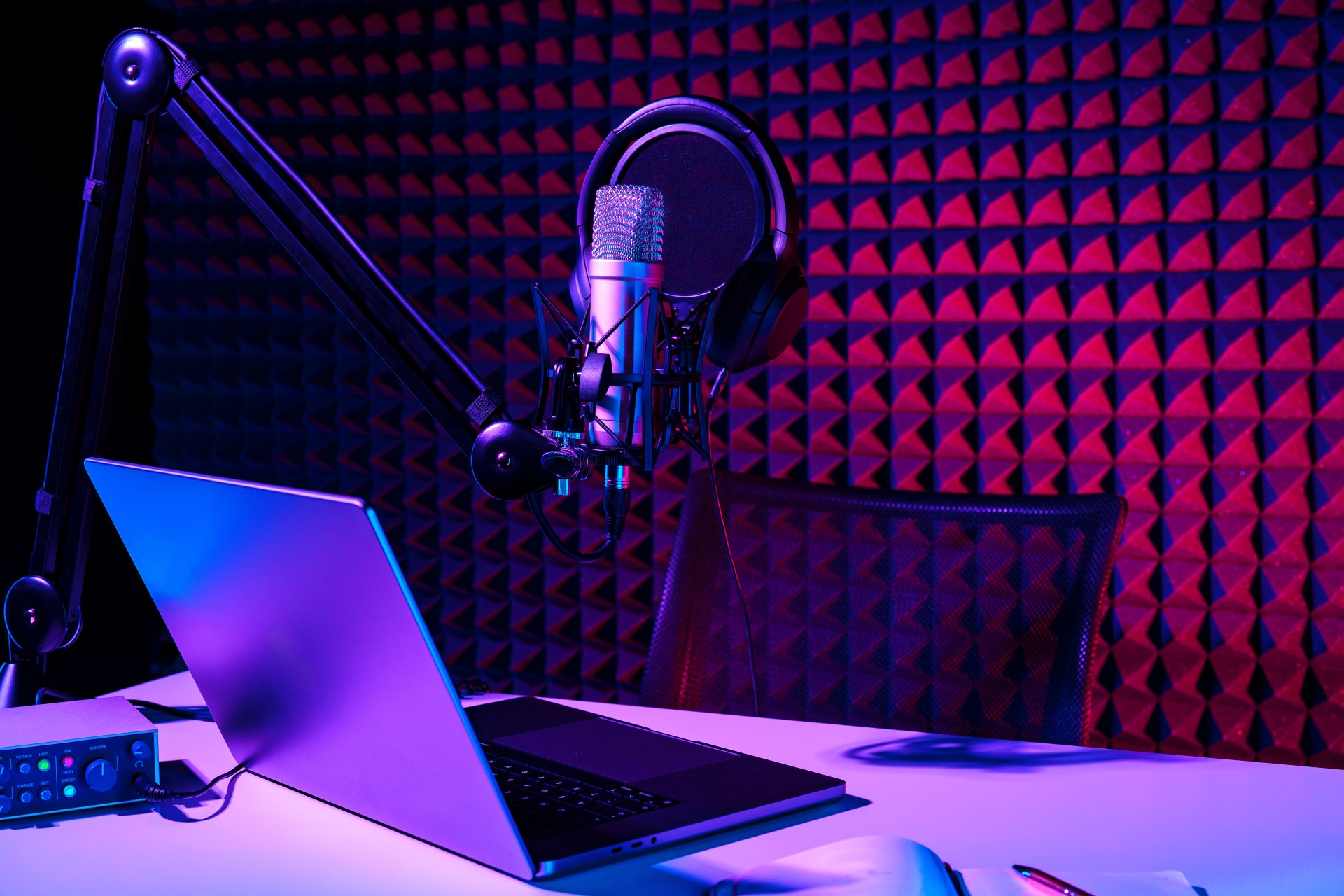
Setting up a podcast studio is one of the most important investments a podcaster, creator, or business can make. The equipment you choose determines the quality of every recording session, the consistency of your audio across every episode, and ultimately the professional impression your show makes on every listener who encounters it.
The challenge is that equipment choices can be overwhelming. The market is saturated with options at every price point, and the advice available online ranges from the genuinely useful to the dangerously incomplete. Many podcasters make equipment decisions based on budget alone, discovering only after recording several episodes that the limiting factor in their audio quality is not the microphone they bought but the room they are recording in, or that the interface they chose introduces noise that no amount of post-production can fully address.
This post gives you a clear, honest picture of the essential equipment for a podcast studio setup, why each component matters, what the realistic performance expectations are at different investment levels, and where the boundaries are between what equipment can solve and what the recording environment itself must address.
Understanding the Signal Chain Before Choosing Equipment
Before examining individual equipment categories, it is essential to understand the concept of the signal chain: the sequence of components through which sound travels from the speaker's voice to the final digital recording. Every link in this chain affects the quality of the audio that reaches the listener, and a weakness at any single link compromises the output regardless of the quality of the other components.
The podcast recording signal chain runs from the acoustic environment, through the microphone, through the preamplifier, through the analog-to-digital converter, into the recording software, and from there through the post-production process to the final distributed file. Understanding this chain changes how equipment decisions are made, because it reveals that buying an expensive microphone for use in a poor acoustic environment does not produce expensive-microphone results. The acoustic environment is the first link in the chain, and its quality limits the ceiling for every other component downstream.
This is why professional podcast studios invest heavily in acoustic treatment before considering microphone upgrades, and why the most expensive microphone available will not save a recording made in a reflective, noisy room. Equipment decisions need to be made in sequence, starting from the acoustic environment and working downstream through the signal chain.
The Acoustic Environment: The Most Important Element No One Talks About
The acoustic environment is not a piece of equipment in the conventional sense, but it is the single most important factor in the quality of a podcast recording and deserves first position in any honest equipment guide.
Why the Recording Room Matters More Than the Microphone
When a voice is recorded in an untreated room, the microphone captures not just the direct sound of the voice but also the reflections of that sound bouncing off the room's hard surfaces. These reflections arrive at the microphone fractionally later than the direct sound and with different frequency characteristics, creating the characteristic hollow, echoey, or boxy quality that distinguishes amateur home recordings from professional studio audio.
The reflections are not problems that can be fully addressed in post-production. Noise reduction tools can reduce some types of room noise, but the reflections that color the sound of the voice are mixed into the direct signal at the point of capture. Separating them in post-production without also affecting the voice is not fully achievable with current technology.
Acoustic treatment addresses this problem at source by placing absorptive and diffusive materials in the recording space that prevent reflections from forming or reaching the microphone with significant energy. The most effective acoustic treatment addresses the full frequency range of the human voice, including the low-frequency content that basic acoustic foam panels are too thin to absorb.
Essential Acoustic Treatment for a Podcast Studio
A properly treated podcast recording space requires several types of acoustic treatment working together. Acoustic panels made from dense absorptive materials like rockwool or mineral wool mounted on the walls and ceiling at primary reflection points absorb mid and high-frequency reflections effectively. Bass traps, typically constructed from thick absorptive material and placed in room corners where low-frequency energy accumulates, address the low-frequency room modes that consumer-grade acoustic foam cannot treat.
Diffusers, which scatter rather than absorb sound energy, can be used on some surfaces to prevent the over-damped, unnatural sound that excessive absorption can create. A well-treated podcast studio uses a combination of absorption and diffusion calibrated to the specific dimensions and characteristics of the room.
For podcasters and businesses in Mumbai who want access to a professionally treated recording environment without the significant investment required to build one, Fox Talkx Studio provides the acoustic infrastructure that ensures every recording is made in the optimal conditions. Explore the studio's capabilities and production services at https://www.foxtalkxstudio.com/services/podcast-editing-in-mumbai.
Microphones: The Voice of Your Podcast
With the acoustic environment established as the foundational consideration, microphone selection is the next critical equipment decision. The microphone is the component that converts the acoustic energy of the voice into the electrical signal that begins its journey through the rest of the signal chain.
Dynamic vs Condenser Microphones for Podcast Recording
The primary choice in podcast microphone selection is between dynamic and condenser microphone types. Each has characteristics that make it more or less suitable for different recording situations.
Condenser microphones are more sensitive and responsive than dynamic microphones, capturing a wider frequency range with greater detail and nuance. They reproduce the full natural character of the voice with accuracy and transparency. Their sensitivity is a significant advantage in a well-treated acoustic environment, where it produces recordings of exceptional clarity and presence. In an untreated environment, however, the same sensitivity that captures vocal nuance also captures room reflections, background noise, and handling noise more readily, making condenser microphones less forgiving of imperfect recording conditions.
Dynamic microphones are less sensitive and more directional than condensers, capturing primarily the sound source directly in front of them while rejecting off-axis sound. This directional rejection makes dynamic microphones significantly more forgiving of poor acoustic environments and more resistant to background noise. They are the more practical choice for home recording situations where acoustic treatment is incomplete, and several professional dynamic microphone models are used in broadcast and podcast production at the highest levels.
For professional podcast studios with proper acoustic treatment, condenser microphones typically deliver superior results. For home studios with imperfect acoustic treatment, a quality dynamic microphone will often produce better practical results than a more expensive condenser in the same environment.
XLR vs USB Microphones: Understanding the Trade-offs
The second microphone choice involves the connection interface. USB microphones connect directly to a computer without requiring additional hardware, making them simple to set up and use. XLR microphones require an audio interface to connect to a computer, adding hardware complexity and cost but providing significantly greater performance potential.
The performance limitation of USB microphones comes from their dependence on the built-in analog-to-digital converter and preamplifier circuitry within the microphone body itself. The quality of these components in USB microphones is constrained by the cost and space limitations of integrating them into the microphone, and they typically cannot match the performance of dedicated external preamplifiers and converters available in quality audio interfaces.
XLR microphones, used with a quality audio interface, allow the preamplifier and conversion stages to be implemented with significantly more care and investment, resulting in audio quality that exceeds what USB microphones can achieve at equivalent or even higher price points.
For serious podcast production where audio quality is a priority, XLR microphones with a dedicated audio interface represent the appropriate choice. For beginner setups where simplicity and cost are priorities and the expectation is to upgrade as the show develops, a quality USB microphone is a reasonable starting point.
Microphone Stands and Shock Mounts
The support system for the microphone deserves consideration alongside the microphone itself. A microphone stand or boom arm positions the microphone at the optimal distance and angle for the speaker, typically six to twelve inches from the mouth and slightly off-axis to reduce plosive sounds. A quality boom arm that can be positioned precisely and holds its position without drift is a genuine investment in recording consistency.
A shock mount isolates the microphone from vibration transmitted through the stand, preventing handling noise and low-frequency rumble from surfaces like desks from reaching the recording. Many professional microphones are supplied with a shock mount, but aftermarket options are available for microphones where the included mount is inadequate.
A pop filter or windscreen placed between the speaker and the microphone reduces plosive sounds, the bursts of air pressure produced by consonants like P and B that can create a distracting popping sound in recordings. Pop filters are inexpensive and highly effective, and they are a standard component of any professional podcast recording setup.
Audio Interfaces: The Bridge Between Microphone and Computer
For setups using XLR microphones, the audio interface is the component that provides preamplification for the microphone signal and converts it from analog to digital format for recording in the computer. The quality of this conversion directly affects the noise floor, dynamic range, and overall character of the recorded audio.
What to Look for in a Podcast Audio Interface
The most important specifications for a podcast audio interface are the quality of the microphone preamplifiers, the performance of the analog-to-digital converters, and the noise floor of the unit when operating at typical gain settings.
Preamplifier quality determines how cleanly the microphone's signal is boosted to a level suitable for recording. Low-quality preamplifiers introduce noise and coloration into the signal, while high-quality preamplifiers boost the signal transparently without adding unwanted characteristics. For podcast recording where voice clarity and naturalness are the primary goals, transparent preamplifiers that do not color the signal are preferable to those with a distinctive sonic character.
Analog-to-digital converter performance determines how accurately the continuous analog signal from the microphone is translated into the discrete digital values that comprise the audio recording. Higher-quality converters preserve more of the original signal's detail and dynamic character during this conversion, resulting in recordings that more accurately represent the sound of the voice in the room.
The noise floor of the interface, typically specified as an equivalent input noise measurement, determines how much self-noise the unit contributes to the recording. A high noise floor is particularly problematic for podcast recording because it produces a constant background hiss that is audible during quiet passages and that must be addressed in post-production at the cost of some audio quality.
Channel Count Considerations for Podcast Setups
For single-host solo podcasts or one-on-one interview formats, a two-channel audio interface that provides two simultaneous microphone inputs is the minimum useful specification and is fully adequate for most situations. Each guest and host has their own microphone connected to a dedicated channel, allowing their audio to be recorded separately and processed independently in post-production.
For panel discussions or interview formats with multiple simultaneous guests, interfaces with four, eight, or more microphone channels are required. Recording each participant on a separate channel provides maximum flexibility in post-production for level adjustment, processing, and editing, and is strongly recommended over mixing multiple voices to a single channel at the recording stage.
Headphones: Monitoring What You Are Actually Recording
Closed-back headphones are an essential component of any podcast recording setup. Their function is to provide acoustic isolation between the headphone output and the microphone, preventing the sound from the headphones from bleeding into the recording, while allowing the host and guests to monitor the recording and hear any remote participants clearly.
Closed-Back vs Open-Back Headphones for Podcast Monitoring
Closed-back headphones use sealed ear cups that prevent sound from leaking out and from entering from the outside. This isolation is essential during recording to prevent headphone bleed into the microphone. Open-back headphones, which have perforated ear cups that allow sound to pass freely, are better for reference listening during editing but should not be used during recording sessions where microphones are active.
The sonic accuracy of the headphones used for monitoring is important both during recording, where the host needs to accurately assess what is being captured, and during editing, where the editor needs to hear the audio as it actually is rather than as the headphones have processed it to sound. Reference-grade closed-back headphones that prioritize accuracy over the bass-boosted, dynamically compressed response of consumer headphones are the appropriate choice for both applications.
Recording Software: Capturing and Editing the Audio
The digital audio workstation, or DAW, is the software environment in which the audio signal from the interface is captured, stored, and subsequently edited into the finished podcast episode. The choice of recording software is less critical to audio quality than the acoustic environment and hardware components discussed above, because most professional recording applications are capable of capturing audio at resolutions that exceed the requirements of podcast distribution.
DAW Options for Podcast Production
For podcast production specifically, the most relevant considerations in DAW selection are ease of use for recording and basic editing, the availability of processing plugins for voice optimization, and compatibility with the other software tools used in the production workflow.
Entry-level and free options including Audacity and GarageBand on Mac are fully capable of capturing and editing podcast audio to a professional standard and are appropriate starting points for new podcasters developing their technical skills. Mid-range professional options including Adobe Audition, Reaper, and Hindenburg Journalist provide more sophisticated editing tools, better plugin integration, and more efficient workflows that become increasingly valuable as production volume grows.
At the professional end, Logic Pro on Mac and Pro Tools on Mac and Windows are industry-standard applications used in professional studio environments. Their comprehensive feature sets and deep plugin ecosystems support the full range of professional audio production tasks, including the sophisticated noise reduction, equalization, compression, and mastering processing that professional podcast post-production requires.
Acoustic Accessories: Completing the Recording Environment
Beyond the primary acoustic treatment of the recording space, several additional acoustic accessories contribute to the quality of a complete podcast studio setup.
Microphone Reflection Filters
A microphone reflection filter is a portable acoustic treatment panel that mounts directly to the microphone stand and surrounds the back and sides of the microphone with absorptive material. Its function is to reduce the reflections reaching the microphone from the room, providing a localized improvement in the acoustic environment at the point of recording.
Reflection filters are not a substitute for proper room acoustic treatment, and their effectiveness in addressing the full range of acoustic problems in untreated rooms is limited. They are most useful as a supplementary treatment in rooms that already have a reasonable level of acoustic treatment, or as a portable solution for recording in locations where permanent treatment is not possible.
Isolation Platforms and Decoupling Devices
Vibration transmitted through surfaces like desks and floors can reach the microphone through the stand and manifest in the recording as low-frequency rumble that is difficult to address in post-production without affecting the bass content of the voice. Isolation platforms that decouple the microphone stand from the desk surface, and elastically mounted bases that absorb vibration before it reaches the stand, reduce this transmitted vibration effectively.
In studio environments on busy streets or in buildings with significant mechanical vibration from HVAC systems, elevators, or industrial equipment, vibration isolation is a meaningful contribution to recording quality that is often overlooked in equipment planning.
Video Equipment for Podcast Studio Setups
For podcasters who are producing video content alongside their audio episodes, the equipment list expands to include the visual capture components of the production setup. Video podcasting has become a standard expectation for serious shows in 2026, and the equipment required to produce video at the quality that modern audiences expect represents a significant addition to the studio setup.
Camera Options for Podcast Video Recording
The camera is the most obvious component of the video setup, and it is one where the options range from built-in laptop cameras, which are generally inadequate for professional video podcast production, to cinema-grade cameras that exceed any practical requirement.
For most podcast video production purposes, a mirrorless camera or a dedicated broadcast camera capable of recording at a minimum of 1080p at 25 or 30 frames per second is the appropriate specification. The quality of the camera's sensor, its performance in the lighting conditions of the recording environment, and the availability of suitable lenses for the recording distance are all relevant considerations.
Many serious podcasters use multiple cameras simultaneously to provide the editorial flexibility of multi-angle video, cutting between a wide shot that shows both host and guest and individual medium shots of each speaker. This multi-camera setup requires a camera switching solution or a post-production workflow that handles the synchronization and assembly of multiple camera feeds.
Lighting for Podcast Video Recording
Professional lighting is one of the most immediately impactful contributions to video podcast quality, and it is one that is frequently underestimated by podcasters transitioning to video. Even an excellent camera will produce flat, unflattering images in poor lighting. A modest camera with good lighting will produce images that look significantly more professional.
The standard lighting setup for podcast video recording consists of a key light that provides the primary illumination for the subject, a fill light that softens the shadows created by the key light, and a backlight or hair light that separates the subject from the background and adds visual depth to the image. This three-point lighting setup, adapted to the specific dimensions and configuration of the recording space, is the foundation of professional-looking podcast video across virtually every production level.
For podcasters in Mumbai who want professional-standard video production as part of their podcast output without the investment of purchasing, configuring, and maintaining a professional video setup, Fox Talkx Studio provides the integrated audio-video production environment that captures both at broadcast quality from every session. Explore the complete production services available at https://www.foxtalkxstudio.com/services/podcast-editing-in-mumbai.
The Bottom Line
The essential equipment for a podcast studio setup is more than a shopping list of microphones and cables. It is a system in which every component contributes to the quality of the final output, and in which the acoustic environment, the most commonly overlooked element, sets the quality ceiling for everything downstream.
A complete, professionally equipped podcast studio setup includes acoustically treated recording space with appropriate absorption and diffusion, professional condenser or dynamic microphones on quality stands with shock mounts and pop filters, a multi-channel audio interface with quality preamplifiers and converters, closed-back reference headphones for monitoring, professional recording software capable of capturing and editing audio to broadcast standards, and for video podcast production, quality cameras, lenses, and professional lighting configured for the specific recording environment.
Each of these components is an investment in the quality and consistency of every episode produced in the studio, and each contributes to the professional impression that determines whether listeners stay with a show long enough to become loyal subscribers.
For podcasters and businesses in Mumbai who want access to a fully equipped professional studio setup without the capital and ongoing investment of building and maintaining one independently, Fox Talkx Studio provides the complete production environment and post-production support that serious podcasters need. Every session in the studio is a session in a space where every component of the signal chain has been selected, configured, and maintained to the standard that professional podcast production demands.
Take the next step toward professional-quality podcast production at https://www.foxtalkxstudio.com/services/podcast-editing-in-mumbai and discover what recording in a properly equipped studio can do for your show.