
Mastering Body Language in Podcast Video Editing: Emotional Storytelling Guide
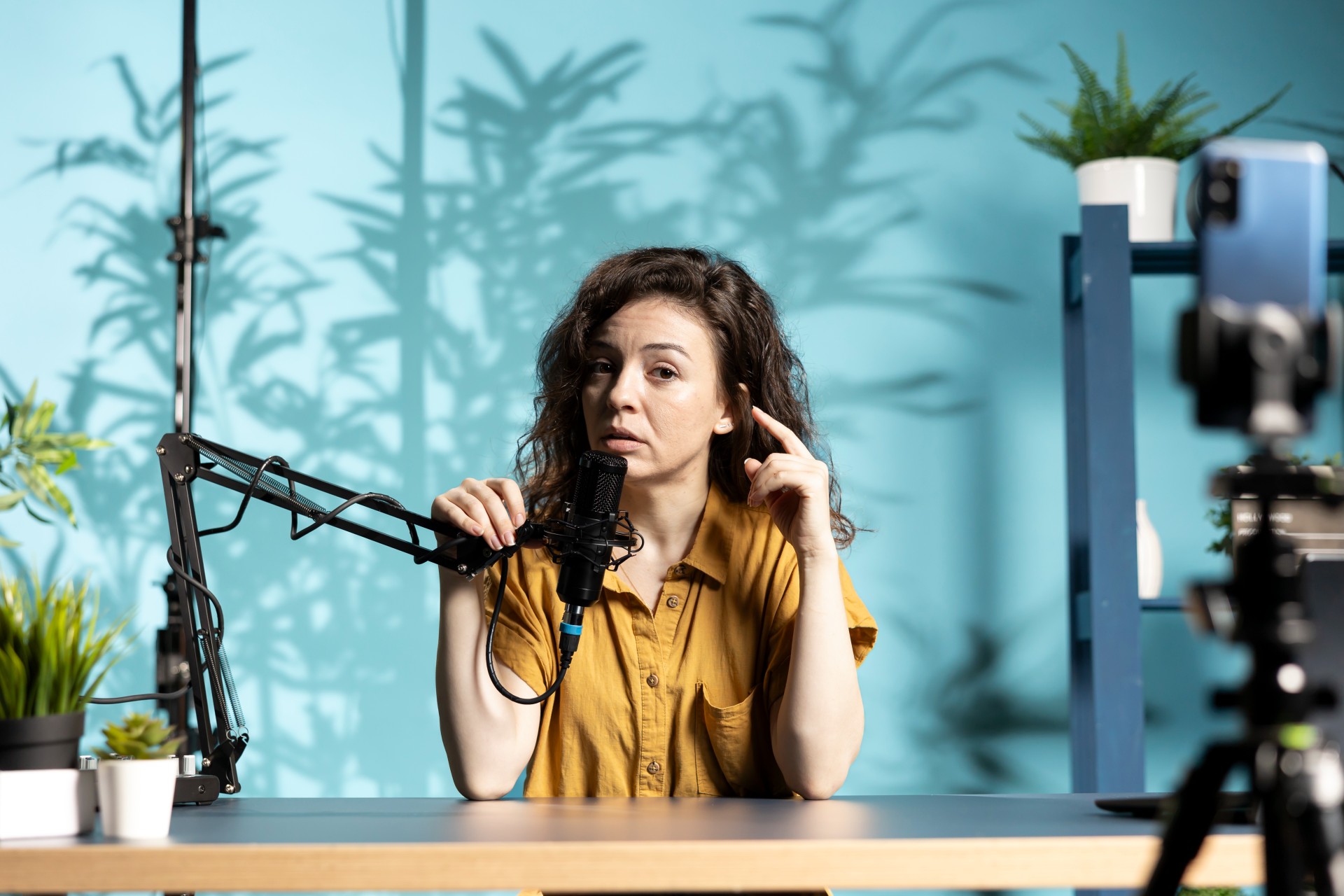
When podcast creators first make the transition from audio to video, they tend to focus on the obvious visual elements: the quality of the camera, the lighting, the studio background. These are important considerations, and they contribute meaningfully to the professional impression the content creates. But the creators and editors who produce video podcast content that genuinely holds audiences, that creates the emotional resonance that turns casual viewers into loyal subscribers, understand that the most powerful visual element in any podcast video has nothing to do with cameras or lighting rigs.
It is the human body.
The way a guest leans forward when they are about to say something they consider important. The micro-expression that crosses a host's face in the half-second before they respond to an unexpected answer. The stillness that comes over a speaker when they are reaching into memory for something genuine. The hand gesture that accompanies an idea at the moment of its fullest expression. These moments of physical communication are happening constantly in every podcast conversation, and they carry emotional information that the audio track alone cannot convey.
Great podcast video editors understand this. They know that their job is not to document a conversation but to curate the emotional experience of one, and that the body language of the speakers is the richest raw material available to them for the creation of that experience. They make editorial decisions, about when to cut, when to hold, which camera angle to use and when, based on what the speakers' bodies are communicating as much as on what their words are saying.
This post examines how professional podcast video editors read and use body language in the edit, what specific physical signals carry the most significant emotional information, and how the deliberate use of body language in editorial decision-making transforms the quality of the emotional storytelling in video podcast content.
Why Body Language Is the Foundation of Emotional Storytelling in Video
The human capacity to read body language is not a learned skill. It is a biological inheritance. Before language, before symbolic communication of any kind, our ancestors communicated intention, emotion, and social information through physical signal. This capacity for reading physical communication is so deeply embedded in the human perceptual system that it operates below the level of conscious attention, continuously monitoring the bodies of the people around us and extracting emotional and social information from their posture, movement, facial expression, and gesture.
This means that viewers watching a podcast video are always receiving two simultaneous streams of information: the verbal stream of what is being said, which they process consciously and deliberately, and the physical stream of how the speakers are holding and moving their bodies, which they process largely automatically and continuously. The verbal stream carries the intellectual content of the conversation. The physical stream carries its emotional content.
When these two streams are aligned, when the verbal content and the physical communication are expressing the same thing, the viewer's experience of the content is coherent and trustworthy. When they are misaligned, when a speaker's words express confidence but their body communicates uncertainty, the viewer's perceptual system registers the discrepancy as a signal of inauthenticity that undermines trust in the speaker and in the content.
For podcast video editors, this dual information stream creates both an opportunity and a responsibility. The opportunity is to use editorial decisions to direct the viewer's attention to the physical information that most powerfully reinforces the emotional content of the conversation. The responsibility is to ensure that the edit does not create misalignments between verbal and physical information that undermine the authenticity of the content being presented.
The Specific Body Language Signals That Matter Most in Podcast Video Editing
Not all body language carries equal editorial weight. Some physical signals are subtle, primarily contributing to the background atmosphere of a scene without delivering significant standalone emotional information. Others are dense with meaning, communicating complex emotional states that the audio alone would take many more words to convey. Professional podcast video editors develop the ability to recognize the high-value body language signals and to make editorial choices that ensure these signals are visible and prominent in the finished content.
Facial Micro-Expressions and the Editorial Window
Facial micro-expressions are the most information-dense body language signals available to the podcast video editor. These are the brief, involuntary expressions, typically lasting less than half a second, that reflect genuine emotional responses before the speaker has the opportunity to modulate or control their facial presentation.
Micro-expressions of surprise, recognition, doubt, delight, discomfort, and genuine amusement all appear regularly in podcast conversations, triggered by unexpected questions, surprising answers, or moments of genuine connection between host and guest. These expressions are authentic in a way that posed or controlled expressions are not, and they carry emotional information that resonates powerfully with viewers because the perceptual system recognizes their genuineness.
The editorial challenge with micro-expressions is that they are brief and require specific conditions to be visible in the footage. The camera must be close enough to the speaker's face to capture the expression clearly. The cut to the speaker's face must occur early enough in the expression for the viewer to see it before it has passed. And the shot must be held long enough after the expression has peaked for the viewer to register its emotional information before the cut moves on.
This means that the editor working with multi-camera footage needs to assess each camera's proximity to each speaker and prioritize the cameras that provide the facial detail necessary for micro-expression reading. A wide shot that shows both host and guest at full body distance may be editorially useful for establishing the conversational context, but it cannot deliver the facial detail that makes micro-expression editorial work possible.
The Lean Forward as an Engagement Signal
One of the most reliable and editorially significant body language signals in podcast conversation is the forward lean. When a speaker leans toward the microphone or toward their conversation partner, they are physically expressing engagement, the body communicating that the mind has increased its investment in what is happening.
The forward lean carries several specific emotional meanings depending on context. In a guest, it typically signals that they are about to say something they consider important, or that they are responding to a question or statement that has engaged them at a deeper level than the general conversation. In a host, it typically signals active listening and genuine interest in what the guest is saying.
Both of these expressions of forward lean carry emotional information that the audio track alone cannot convey with the same immediacy. The viewer who sees a guest lean forward before delivering a statement knows, before the words arrive, that what is coming is significant. This advance signaling creates a micro-anticipation that primes the viewer to receive the following words with heightened attention.
Great editors use the forward lean as an editorial cue. When the footage shows a speaker leaning forward, the editor considers whether the current shot is close enough to make the lean visible and significant. If the footage is on a wide shot that minimizes the visual impact of the lean, the editor may cut to a closer shot that makes the lean more prominent, ensuring that the viewer receives the full emotional significance of the physical signal before the words that follow it arrive.
For podcast creators in Mumbai who want their video content to be edited with this level of body language sensitivity, Fox Talkx Studio provides professional podcast video editing services where physical communication is treated as primary editorial material. Explore what body-language-aware editing looks like at https://www.foxtalkxstudio.com/services/podcast-editing-in-mumbai.
The Stillness of Genuine Reflection
At the opposite end of the movement spectrum from the forward lean is the specific kind of physical stillness that accompanies genuine reflection. When a speaker is truly thinking, reaching for a memory or working through a complex idea, their body often becomes very still. Minor fidgeting stops. Gestures pause. The eyes may move upward or inward as the speaker accesses internal experience. This stillness is qualitatively different from the stillness of disengagement or boredom, and experienced viewers read it as authentic cognitive engagement.
This reflective stillness is one of the most powerful authenticity signals available in podcast video editing. A speaker who becomes still in response to a difficult question communicates, through that stillness, that they are taking the question seriously and searching for a genuine answer rather than delivering a prepared response. The viewer's perceptual system recognizes this signal and responds with increased trust and attention.
The editorial handling of reflective stillness requires the editor to resist the impulse to cut away from the still speaker. The instinct in editing is to interpret visual stillness as a sign that nothing is happening, and to cut to another shot or another speaker to maintain visual interest. But reflective stillness is a moment when something very significant is happening, it is just happening internally rather than externally. Cutting away from this stillness breaks the tension of the moment and reduces its emotional impact on the viewer.
Great editors learn to distinguish between stillness that represents active reflection and stillness that represents disengagement or a technical pause in the conversation. The former deserves to be held. The latter is appropriate to cut away from. This discrimination requires careful attention to the specific quality of the stillness and to the verbal and visual context in which it occurs.
Gesture Timing and the Expression of Conviction
Hand gestures are a pervasive element of human communication, and they carry specific information about the speaker's relationship to what they are saying. Research in gesture studies consistently shows that speakers gesture more frequently and expressively when discussing ideas they feel strongly about, and that the timing of gestures relative to speech reveals important information about the authenticity and conviction of the verbal content.
In genuine, spontaneous speech, gestures typically slightly precede the words they accompany, as though the body is expressing the idea a fraction of a second before the verbal formulation arrives. This gesture-speech relationship is a reliable indicator of authentic communication. When a speaker makes a gesture that is synchronized with or follows the words it accompanies, rather than preceding them, it can indicate rehearsed or performed communication rather than spontaneous expression.
For the podcast video editor, the most significant gestures to capture and showcase are those that express conviction: the open-palmed gesture that accompanies a statement the speaker is fully committed to, the pointing gesture that indicates precision and specificity, the expansive gesture that accompanies a speaker's vision of scale or possibility. These gestures communicate the speaker's emotional investment in their ideas in a way that adds visual and emotional dimension to the verbal content.
Ensuring these gestures are visible in the edit requires the appropriate camera angle and shot composition. A shot framed too tightly on the speaker's face excludes the hands entirely, losing the gesture information. A shot that includes the upper body from mid-chest to head captures both facial expression and hand gesture, providing the richest combination of body language information for the editor to work with.
How Editorial Decisions Shape the Viewer's Experience of Body Language
Understanding what body language signals carry the most significant emotional information is necessary but not sufficient for great podcast video editing. The second dimension of the skill is the editorial decision-making that shapes how and when the viewer encounters these signals.
The Timing of the Cut to Reaction
The most consequential editorial decision involving body language in podcast video editing is the timing of the cut to a reaction shot. A reaction shot is a cut from the speaker to another person in the conversation, typically to show the listener's physical response to what is being said.
The timing of this cut determines whether the reaction shot adds meaningful emotional information or creates a distracting interruption. Cut too early, before the listener's reaction has fully formed, and the viewer sees a neutral expression that carries no emotional information. Cut too late, after the most expressive moment of the reaction has passed, and the viewer sees the settling of an expression rather than its peak.
The optimal cut timing is to the peak of the reaction, the moment when the listener's body language is most expressively communicating their response to what they have just heard. Finding this moment in the footage requires the editor to watch the reaction footage carefully, identifying the specific second at which the physical expression is most informative, and placing the cut to arrive at that moment rather than before or after it.
This level of precision in reaction shot timing is one of the clearest markers of editorial sophistication in podcast video editing. It is also one of the dimensions of editing that is most difficult to achieve without multi-camera footage that captures all participants simultaneously throughout the conversation. A single-camera recording that must cut away from the speaker to show reactions loses the simultaneity that makes precise reaction timing possible.
Holding Shots to Honor Significant Physical Moments
The decision to hold a shot rather than cut away is one of the most powerful editorial tools for body language storytelling, and it is one that beginning editors typically underuse because the instinct under time pressure is to maintain visual variety through cutting.
When a speaker's body language is communicating something significant, holding the shot long enough for that communication to fully register with the viewer is an editorial act of emphasis. The extended duration of the shot signals to the viewer that this moment deserves attention, that what the speaker's body is expressing is important enough to observe without interruption.
This editorial holding is most appropriate during moments of visible emotion, reflective stillness, or significant physical expression that would be disrupted by a cut. A guest who is visibly moved by a question they have been asked deserves a shot that is held through the visible expression of that emotion, not cut away from at the first sign of non-neutral facial expression. The emotional resonance of the moment for the viewer is directly proportional to the time they are given to experience it.
Great editors develop a sense for how long to hold significant physical moments based on the quality of the expression and the context of the conversation. The general principle is to hold until the expression has peaked and begun to settle, giving the viewer both the rise and the beginning of the fall of the emotional moment. Cutting at the peak leaves the viewer's emotional response incomplete. Holding through the entire settling of the expression can feel overwrought. The resolution is somewhere between these extremes, and finding it is a matter of editorial judgment that develops through practice.
Using Shot Size to Amplify Emotional Intimacy
The emotional intimacy of the viewer's relationship to a speaker in video content is directly related to the shot size used to show that speaker. A wide shot that shows a speaker at full body distance creates an observational relationship. A medium shot that shows them from waist or chest to head creates a social relationship. A close-up that fills the frame with the face creates an intimate relationship.
These distinctions map onto the psychological concept of personal space. Wide shots place the viewer at a public distance from the speaker. Medium shots place them at a social distance. Close-ups place them at a personal or intimate distance. The emotional response the viewer has to the speaker is shaped by this implied spatial relationship.
Great editors use shot size deliberately to control the emotional intimacy of specific moments. During a passage of general informational exchange, a medium shot provides appropriate social distance. During a moment of personal disclosure, emotional revelation, or genuine vulnerability, a close-up amplifies the intimacy of the moment by reducing the implied spatial distance between viewer and speaker.
This deliberate management of shot size across the arc of an episode creates an emotional texture, the experience of being variously at different levels of intimacy with the speakers, that reflects the natural ebb and flow of conversation and makes the viewing experience feel more like presence in the room than observation of a performance.
For podcast creators and production teams in Mumbai who want their video content to be edited with this level of intentional emotional storytelling, Fox Talkx Studio provides professional podcast editing services where body language, shot selection, and emotional pacing are all considered together as part of an integrated editorial approach. Discover what this looks like in practice at https://www.foxtalkxstudio.com/services/podcast-editing-in-mumbai.
The Role of Studio Setup in Enabling Body Language Editing
The editorial work described above is only possible if the footage actually captures the body language signals that the editor needs to work with. This requirement places specific demands on the studio recording setup that many podcast creators do not consider when planning their video production.
Camera Placement and Body Language Capture
The placement of cameras in a podcast video recording setup determines what body language information is available to the editor. Cameras positioned too far from the speakers, producing shots that are too wide to read facial expression, eliminate the micro-expression and eye movement information that is among the most emotionally significant body language available. Cameras positioned too tightly, showing only the face and neck, eliminate gesture information that communicates conviction and engagement.
The optimal camera configuration for body language-aware podcast video editing typically includes at least one camera per speaker positioned at a medium shot distance that captures both facial expression and upper body gesture, supplemented by wider shots that establish the spatial relationship between speakers and provide establishing and transitional coverage.
The Professional Studio as a Body Language Environment
The physical environment of the recording also affects the body language of the speakers and therefore the editorial material available for body language storytelling. Speakers who are comfortable in the recording environment, who are not distracted by technical concerns or physical discomfort, are more physically expressive and more authentically communicative than those who are tense or distracted.
Professional studio environments, with their purpose-built physical comfort, professional technical management, and designed acoustic and visual aesthetics, create conditions in which speakers can be fully present in the conversation. This physical presence manifests in richer, more expressive body language that provides the editor with more and better raw material for emotional storytelling.
The physical design of the studio also affects the visual quality of the body language captured. Appropriate lighting that models the three-dimensionality of the face and body, and that eliminates the flat, shadowless appearance produced by poor lighting, gives the editor footage in which physical expression is visually clear and editorially usable. Body language that is captured in poor lighting, where faces are partially in shadow or where the image is flat and two-dimensional, cannot be used for the close, emotionally significant shots that body language storytelling requires.
Key Takeaways
Body language is the primary vehicle for emotional communication in human interaction, and in podcast video content it is the richest raw material available to the editor for the creation of genuine emotional storytelling. The physical signals of the speakers, their micro-expressions, forward leans, reflective stillness, and gestures of conviction, carry emotional information that the audio track alone cannot convey.
Great podcast video editors read this physical communication as primary editorial material. They make decisions about when to cut, how long to hold, and which shot size to use based on what the speakers' bodies are communicating, not just on what their words are saying. They time reaction shots to the peak of physical expression. They hold significant moments long enough for their emotional weight to register. They use shot size to control the intimacy of specific passages in the conversation.
These editorial skills are grounded in an understanding of how body language works, what specific physical signals carry the most significant emotional information, and how editorial choices shape the viewer's experience of that information. They are developed through deliberate practice and through the cultivation of a sensitivity to physical communication that operates in parallel with attention to verbal content.
For podcast creators in Mumbai who want their video content to be edited with this level of body language awareness and emotional storytelling craft, Fox Talkx Studio provides professional podcast editing services where the physical dimension of the conversation is treated with the same editorial care as the verbal dimension. Visit https://www.foxtalkxstudio.com/services/podcast-editing-in-mumbai to discover what emotionally intelligent podcast video editing looks like and what it can do for the audience relationships your show is building.